
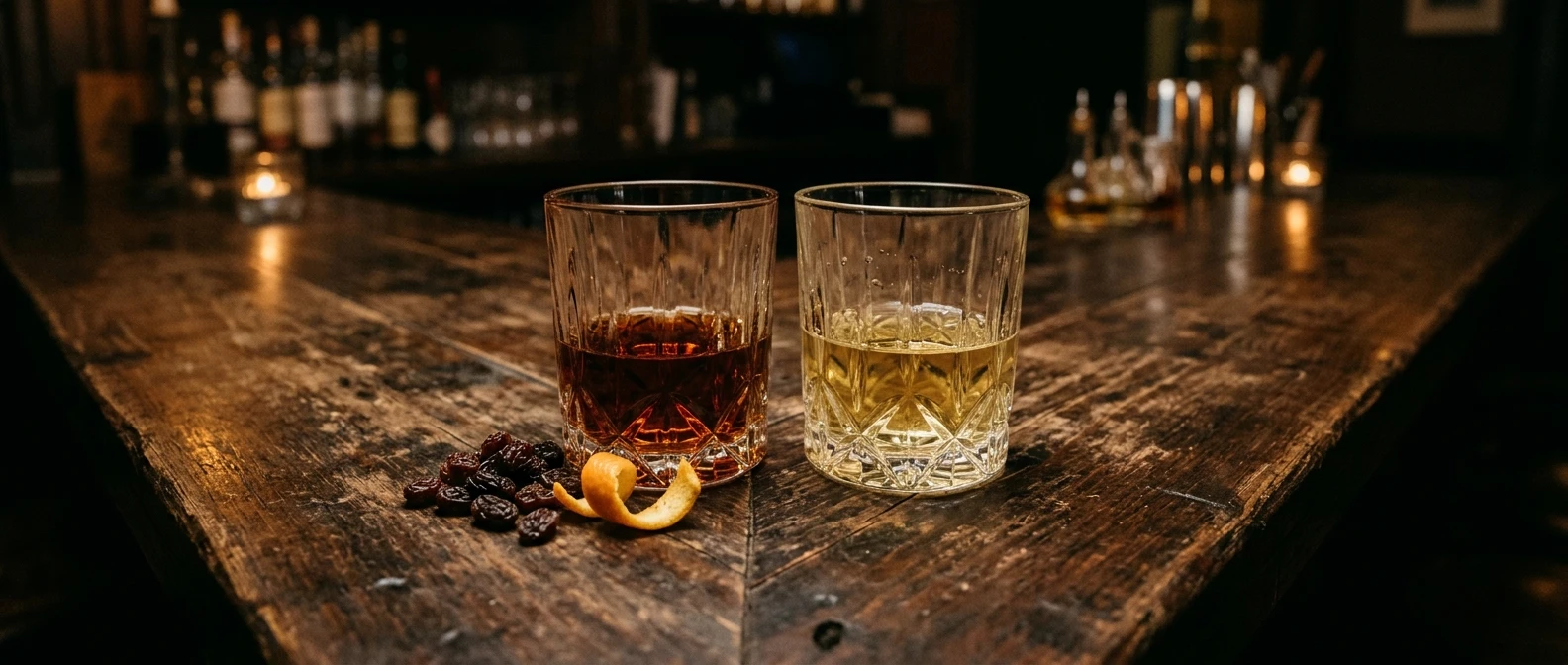
Pour a glass of Macallan or Glendronach next to a pale Speyside malt and the first difference you notice is colour. The second is the smell: dried fruit, orange peel, a bit of spice. Much of that comes from one thing, a wooden cask that once held sherry. Sherry cask whisky is among the most recognisable styles in Scotch, and there is a practical reason it exists, which has little to do with romance.
How sherry casks ended up in Scotch whisky
Britain has been a big buyer of Spanish sherry for centuries. For much of that time the wine travelled in oak casks and was bottled after it arrived. Once a cask was emptied in a British warehouse or merchant’s cellar, it was an empty, sturdy, watertight barrel that someone needed to find a use for.
Whisky makers needed barrels, so the match was easy. Scottish distillers and the merchants who bought spirit from them could pick up used sherry casks at a reasonable price. Whisky matured in them came out darker, sweeter and spicier than spirit left in plain wood, and drinkers liked it.
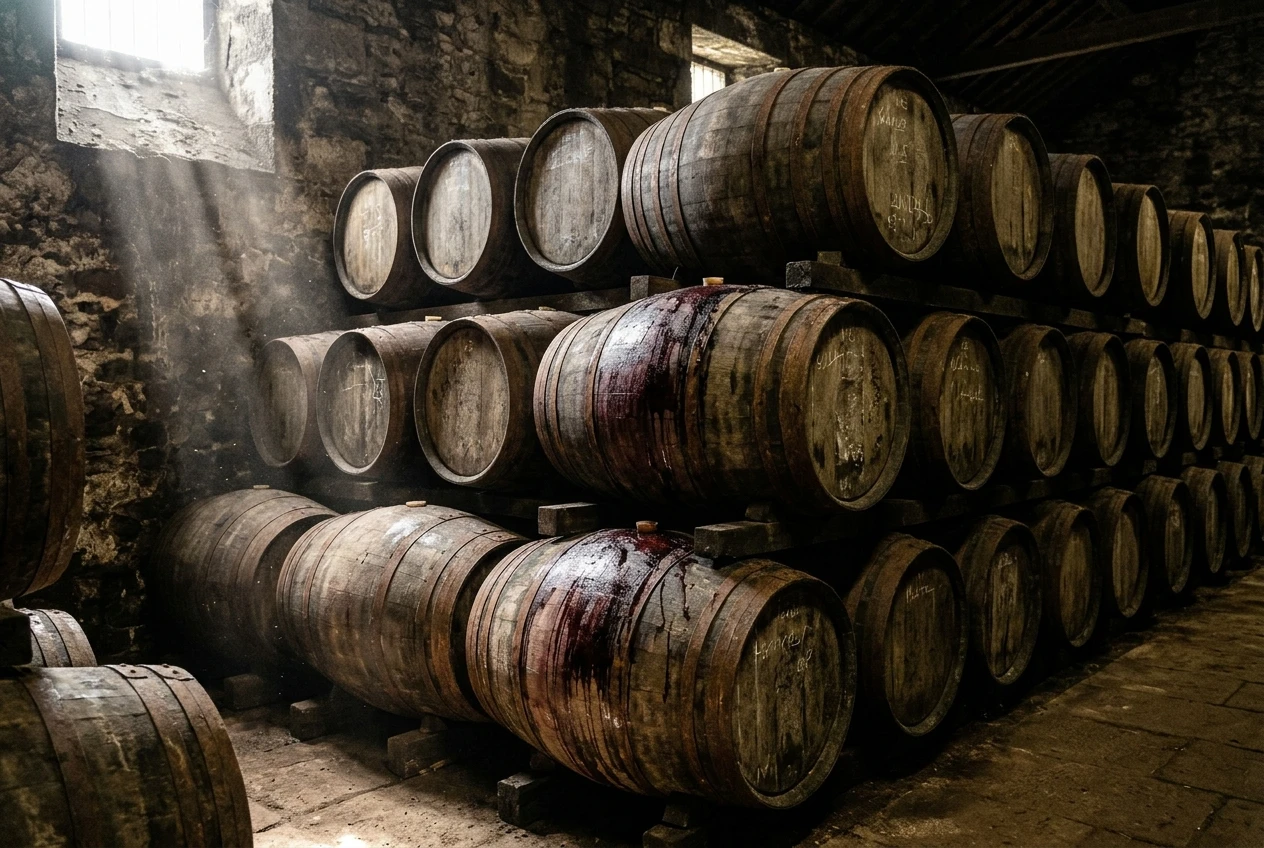
That supply changed in the early 1980s, when rules in Spain required sherry to be bottled in the region where it is made. The bulk shipping of sherry in casks to Britain stopped, and the easy flow of used casks stopped with it. Distilleries now arrange the supply themselves. They order casks from Spanish coopers, have them filled with sherry for a couple of years (a process called seasoning), then empty them and ship them to Scotland for whisky.
By then, most of the Scotch industry had moved to another supply of casks: ex-bourbon barrels. US law requires new oak for bourbon, so there is a steady stream of used barrels, and they became the default for Scotch. Sherry became the premium alternative. If you want to see how the two styles differ in the glass, our guide on the difference between whisky and bourbon covers the bourbon side.
Oloroso, Pedro Ximénez, Fino: what was in the cask before the whisky
“Sherry” covers several very different wines, and the type that was in the cask changes what ends up in your glass.
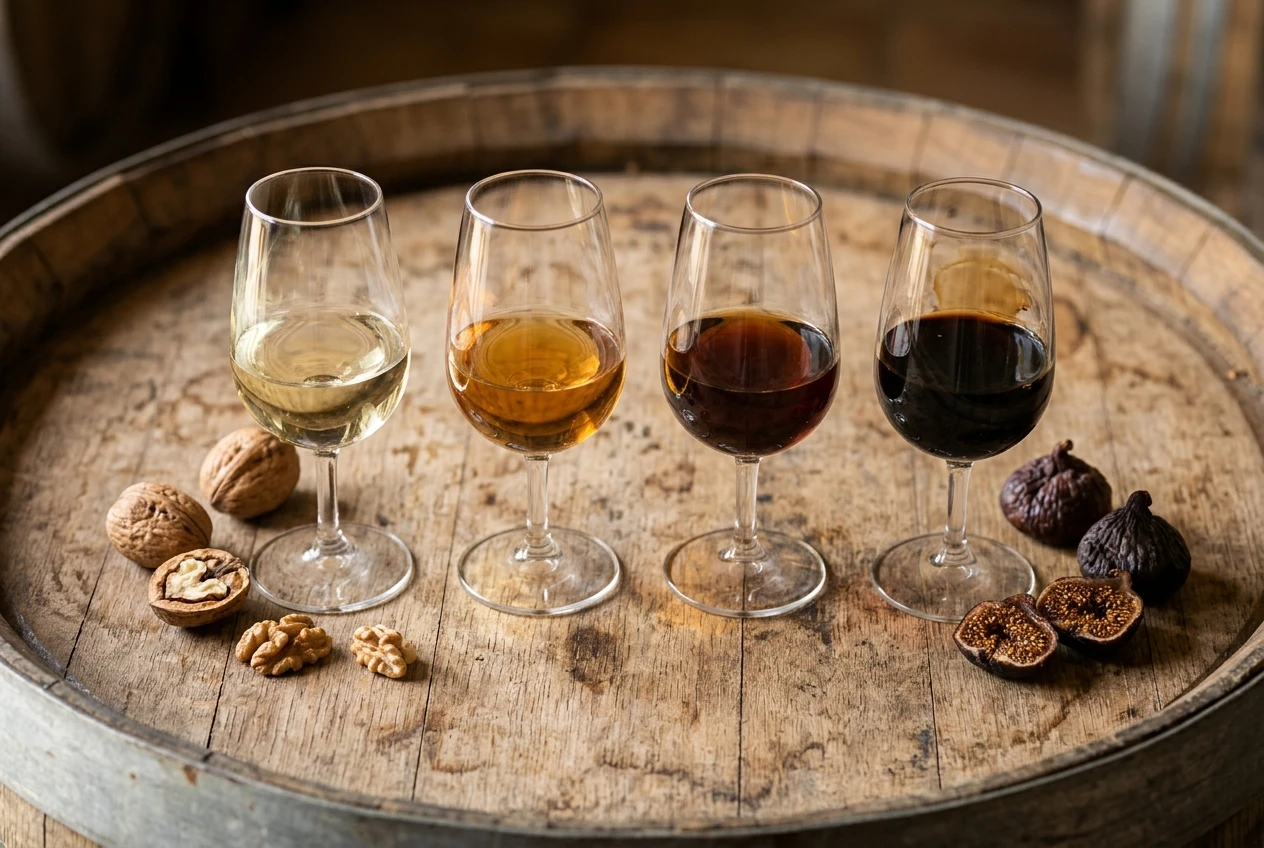
- Oloroso: a dry sherry aged with plenty of contact with air, which makes it dark, nutty and rich. Oloroso is the workhorse of sherried Scotch. Expect walnut, dried fruit, dark spice and a savoury edge. Despite the dry wine, whisky from Oloroso casks often tastes sweet because of the fruit and wood sugars.
- Pedro Ximénez (PX): a very sweet, dark, syrupy wine made from grapes dried in the sun. PX casks tend to give raisin, fig, treacle, toffee and dark chocolate notes. They are often used for a finish or blended with Oloroso casks, since PX alone can turn a whisky heavy.
- Fino and Manzanilla: pale, dry, sharp wines aged under a layer of yeast called flor. They are far less common in Scotch. When they do show up, expect a drier, more saline, nutty character, sometimes with green apple or almond.
- Amontillado and Palo Cortado: styles that sit between Fino and Oloroso. Amontillado begins life under flor and then ages with air, while Palo Cortado has Oloroso’s weight with some of Amontillado’s finesse. You will see them now and then on limited releases.
When a label only says “sherry cask”, it usually means Oloroso or a blend of Oloroso and PX. Better labels name the type, and that tells you what to expect before you open the bottle.
What the oak and the leftover sherry actually do to the spirit
Two things are working on the whisky: the wood itself, and the wine that soaked into it.
The wood comes first. Oak releases vanillin (vanilla), tannins (dryness and spice), and sugars that give toffee and caramel notes. Sherry casks are made from European oak, often Spanish, or from American oak. European oak tends to give more tannin and spice, such as cinnamon, clove, nutmeg and ginger, along with dried fruit and a drying, grippy finish. American oak leans toward vanilla and coconut, which is why the bourbon-cask style often tastes sweeter and softer. Both kinds of oak turn up in sherry casks, so the wine’s influence is not the only variable.
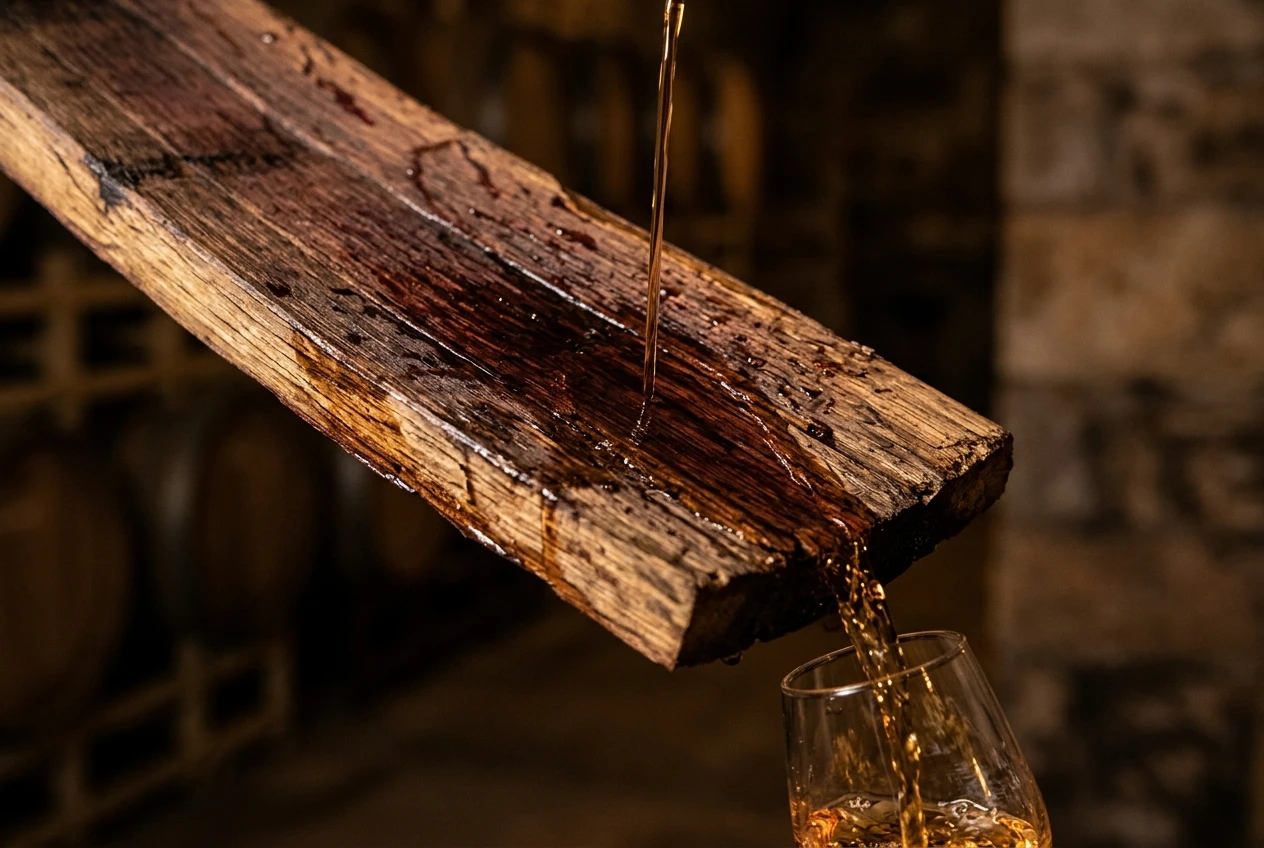
The second factor is the wine in the wood. During seasoning, the sherry soaks into the staves. When the whisky goes in, it draws that wine back out, along with the compounds it carried. That is where the raisin, fig, orange peel and nutty notes come from.
Time also matters. Over the years in the cask, the harsh edges of new spirit soften, and the oak and wine flavours blend into it. A heavily sherried whisky aged for many years often tastes like a rich fruit cake. A lighter spirit in the same cask can get overwhelmed, which is why distillers choose carefully which spirit goes into which wood. Our article on whether whisky gets better with age explains why more years in wood does not always mean a better dram.
One more quirk: some sherry casks are treated with sulphur before filling, to keep the wine fresh. In some whiskies, drinkers pick up a faint match-strike or rubbery note. Many distilleries try to avoid it, and many drinkers never notice it, but it is a real thing to know about if a bottle ever smells slightly like a struck match.
Spotting sherry influence in the glass: the flavours to look for
You do not need a trained nose to pick up sherry cask whisky. Start with what you see, then smell, then taste.
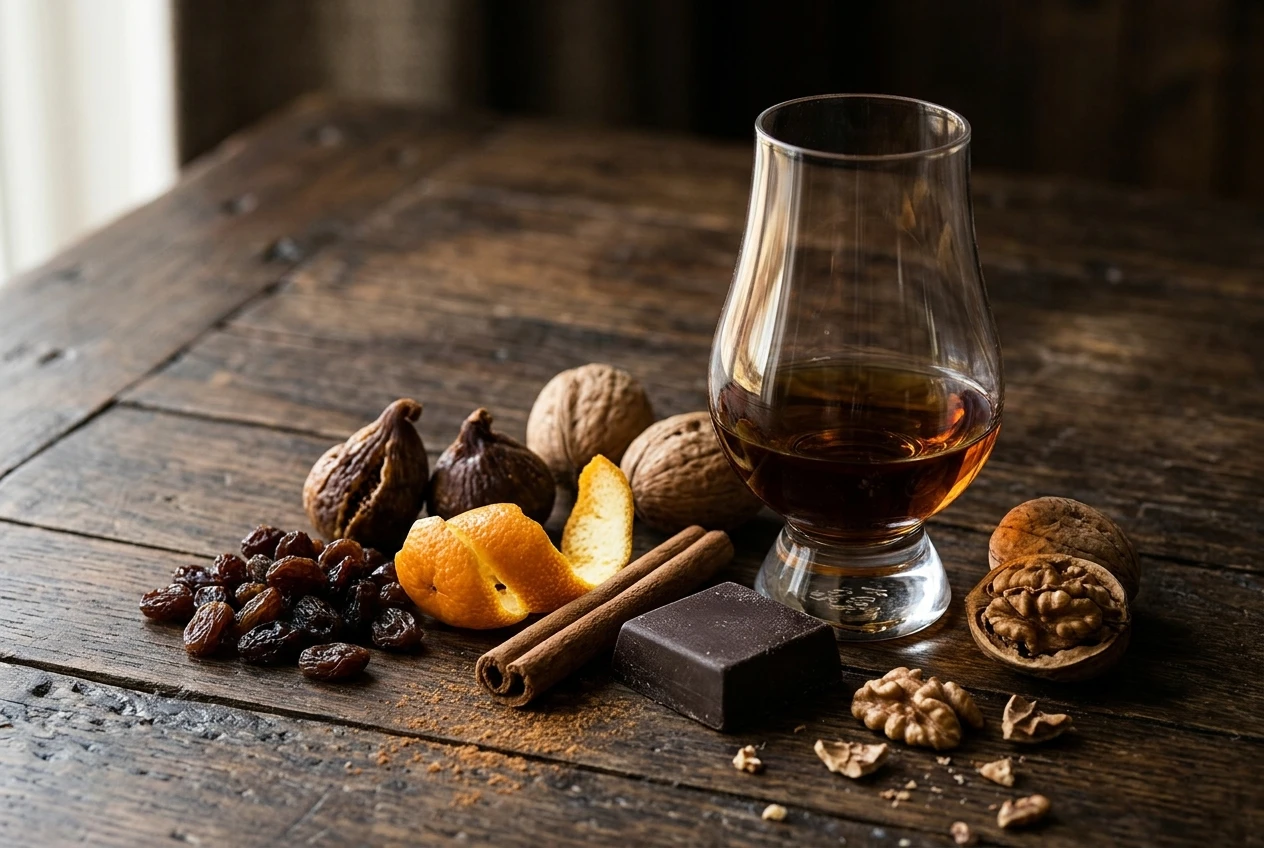
Colour. Sherry casks tend to give amber to deep mahogany shades. Treat this as a hint only. Scotch whisky is allowed to have caramel colouring added, so a dark whisky is not guaranteed to be sherried, and a pale one is not guaranteed to be bourbon-aged.
Nose. Look for dried fruit first: raisins, sultanas, figs, dates, prunes. Then orange peel or marmalade, and baking spices like cinnamon and nutmeg. Walnuts, dark chocolate, coffee and a faint leathery or tobacco note are also common, especially from Oloroso.
Palate. Sherried whiskies often feel richer and fuller in the mouth, with a sweet start that moves into spice and a dry, tannic finish. Ginger, black pepper and cocoa appear late.
A quick way to train your nose is to taste a sherry cask whisky beside a bourbon cask one. The bourbon-aged dram usually shows vanilla, honey, citrus and coconut, while the sherried one pushes toward fruit cake and spice. Our post on telling the difference between whiskies has more tips for tasting side by side.
Sherry cask, sherry finish and sherry seasoned: what the label really tells you
The wording on the label gives you real clues, though the terms are used loosely.
- Sherry cask / sherry oak / matured in sherry casks: the whisky spent all or most of its maturation in sherry-seasoned wood. This usually gives the strongest influence. Check whether the label says the whole whisky was matured this way or just part of it, as some bottles are a vatting of sherry and bourbon casks.
- Sherry finish: the whisky matured mainly in other casks (often bourbon) and was then moved into sherry casks for a final stretch, from some months to a couple of years. The result is usually a lighter touch: a fruit and spice layer over a base character that is still clearly the distillery’s own.
- Sherry seasoned: the cask was treated with sherry, often for a limited period, to prepare it for whisky. The wine influence is usually milder than in a cask that held sherry for years, and the effect depends on the seasoning.
- First fill vs refill: a first fill cask is holding whisky for the first time after its sherry use, and it gives the biggest flavour hit. A refill cask has already matured whisky once and gives a gentler effect.
Tight definitions on labels are limited, so read the distillery’s own tasting notes and product page for details. When a brand names the sherry type (Oloroso or PX) and the cask type, you are usually looking at a more transparent product. If a bottle has no age statement, our guide to no age statement whisky explains what that tells you and what it does not.
Why sherry casks are scarcer and pricier than they used to be
Several things push sherry cask whisky up in price.
First, supply. Since bulk shipping of sherry ended, casks have to be made new, seasoned with wine for a couple of years and then shipped. That is a long, expensive process compared with buying used bourbon barrels, which come as a by-product of American whiskey production.
Second, the wood. Spanish oak is slow to source and prepare, and coopers who make sherry casks can only produce so many. Demand from whisky makers, and from the sherry bodegas themselves, competes for the same wood.
Third, demand. Sherried whisky has grown very popular, and distilleries have increased the share of sherry casks they use, which tightens supply further. Older sherried whisky is particularly hard to find, because the spirit has to sit in expensive wood for years before it can be sold.
The practical upshot for buyers: a bottle labelled sherry cask matured often costs noticeably more than a similar-aged bourbon cask whisky from the same distillery. A sherry finish is a more affordable way to get a taste of the style, though the flavour impact is lighter. If you are weighing whether older bottles are worth collecting, our piece on whisky as an investment discusses the risks.
Sherried whiskies worth trying, from a first dram to a splurge
Specific bottlings and ages change over time, so check current availability and pricing before you buy. These distilleries are widely known for the sherried style.
A first dram:
- Glenmorangie Lasanta: a Highland single malt finished in Oloroso and PX casks. A friendly introduction to the style, with orange, spice and a rounded sweetness.
- Tamdhu 10 Year Old: matured in sherry oak casks, in a Speyside style that is soft and fruity, with apple, spice and gentle oak.
Stepping up:
- Glenfarclas 12 Year Old: a Speyside malt with a strong sherry cask character, known for dried fruit, nuts and a rich finish.
- Glendronach 12 Year Old: a Highland malt matured in Oloroso and PX casks, with fruit cake, nuts and dark chocolate.
- Macallan 12 Years Old Sherry Oak: a widely available, classic example of the style, with dried fruit, ginger and orange.
A cask-strength option:
- Aberlour A’bunadh: bottled at cask strength from Oloroso casks. It is big, rich and intense, and a splash of water opens it up.
A splurge:
- Glendronach 18 Year Old: a richly sherried Highland malt, with plenty of dried fruit, spice and dark sweetness.
- Glenfarclas 25 Year Old: a long-aged sherried Speyside, for when you want the style at its most refined.
If you are not sure what suits your palate, our guide on choosing the best whisky for your taste can help you narrow the field.
Try it yourself
Pick one sherry cask bottle from the list above, pour it next to a bourbon cask whisky, and see if you can spot the difference. Look for dried fruit and spice in the sherried glass, and vanilla and honey in the other. Then check the latest price before you buy, as sherried bottles move in price more often than most.
Do you have a preferred cask style? Let me know in the comments..
Until next time
Slàinte
Tony

My name is Tony and I’m the creator of The Whisky Shed, a place where good drams meet good stories. From tasting notes to deep dives into distillery history, I share honest, approachable whisky knowledge for anyone who loves a great pour. Whether you’re exploring your first bottle or expanding a growing collection, my goal is to make whisky simple, enjoyable, and worth raising a glass to. Slàinte 🥃