
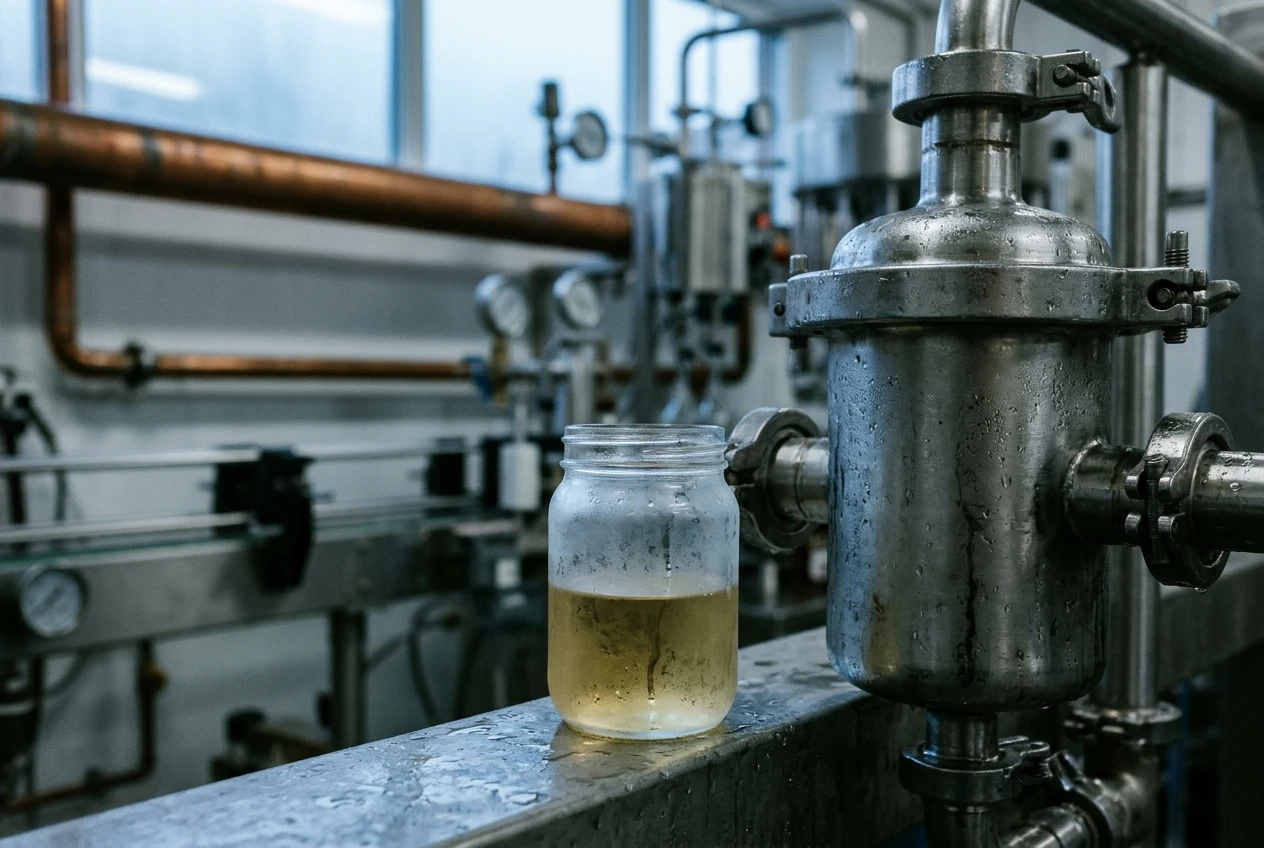
You pour a dram, add a splash of water or a couple of ice cubes, and the whisky turns from clear amber to a pale, milky swirl. It looks like something has gone wrong. Nothing has, and the haze is one of the clearest visible signs of the thing behind the question what is chill filtered whisky?

This guide covers what chill filtration is, why distillers do it, how much it matters for flavour, and how to read a label so you can decide for yourself.
Why your whisky sometimes turns cloudy in the glass
Whisky picks up oily compounds from the spirit and the cask during distillation and maturation. Among them are fatty acid esters, fatty acids and traces of proteins. At normal strength and room temperature they stay dissolved and invisible.
Make the whisky colder, or add water, and some of those compounds stop dissolving as easily. They clump into tiny particles that scatter light, and the whisky looks hazy. Turn it back to room temperature, or leave it standing, and the haze often fades.
The haze does not mean the whisky has spoiled, been tampered with or gone off. It is the natural character of an unfiltered spirit showing up in the glass. Bottles with a lower alcohol content tend to show it more readily, because less alcohol means less power to keep those compounds dissolved.
What chill filtration actually does, step by step
Chill filtration removes those compounds before the whisky reaches the bottle, so the haze never appears. The process goes roughly like this:
- The whisky is chilled. It is cooled to a low temperature, somewhere near freezing, though the exact figure varies from producer to producer.
- The compounds clump. Cold makes the oily compounds condense into particles, the same particles you would otherwise see as haze in your glass.
- The whisky is passed through a fine filter. The filter catches the particles and lets the liquid through.
- The clear whisky is bottled. Because the haze-forming material is gone, the whisky stays bright when it gets cold or when you add water or ice.
The whisky is not flavoured, sweetened or altered in any other deliberate way during this process. It is a physical clean-up, aimed at appearance. What it takes out alongside the haze is a separate question, and we will get to it.
Why distillers chill filter in the first place
The reason is mostly about how a bottle looks to the person who buys it. A whisky that clouds when it gets cold can look faulty to a customer who does not know why. Shops and bars can be cold places, bottles travel through winter weather, and many drinkers put ice in the glass. A distiller who sells in many countries cannot explain the haze to every buyer.
Chill filtration gives a bottle that looks the same in any condition. That consistency is valuable to a brand: the whisky you buy this month looks like the one you bought last month, whatever the weather did to it in between.
It also matters most for bottles at lower strengths. Whisky bottled at the common 40% ABV has less alcohol holding the oily compounds in solution than a 46% or cask strength bottling, so it is more likely to haze. Filtering those bottles is a simple way to keep them clear.
What gets lost, and what might not: the flavour debate
This is where whisky fans start to disagree, so it helps to separate what is known from what is argued over.
The known part: the compounds removed by chill filtration are the same oily, fatty materials that give unfiltered whisky its haze. Some of them are tied to texture and body, and they can carry flavour with them.
The argument on one side is that removing them takes away some of the oily, viscous mouthfeel and a little of the depth of flavour, so a non-chill filtered whisky tastes fuller and more textured. Many enthusiasts hold this view, and it is a big part of why they look for the label statement.
The argument on the other side is that the difference is small, or too slight to notice reliably, especially once water or ice is added. Some drinkers who try both side by side find them hard to separate. Others pick out the difference straight away. Both experiences are real, and neither one proves that one style is better. Personally, I think the difference is so minute that you would need an incredibly clean and refined palate to be able to confidently tell the difference. Some people do have this ability but some people just like to say they have it to sound important and more educated than others.
Several other things shape what you taste at the same time: the strength of the whisky, the casks used, the age and the distillery’s house style. A difference you notice between two bottles is rarely down to filtration alone, so be wary of anyone who says filtration is the whole story. If you enjoy testing your palate, our piece on whether you can really tell the difference between whiskies is a useful companion.
Why non-chill filtered whisky is having a moment
Over the past years, “non-chill filtered” has become a selling point rather than a footnote. A few reasons stand behind that.
- Drinkers want less processing. Many buyers like the idea of a whisky that has been handled as little as possible between the cask and the bottle.
- Enthusiasts have made it a talking point. Online communities, reviewers and independent bottlers often mention filtration, and distilleries have taken notice.
- It fits with higher strengths. Bottlers who choose not to chill filter often bottle at 46% or above, because the higher strength keeps haze down. Those bottles tend to feel richer, which is part of their appeal.
- Haze has lost its stigma. As more people learn why whisky clouds, the cloudiness reads less like a flaw and more like a sign of an untouched spirit.
The label is also a marketing tool, so it pays to treat it as one piece of information rather than a guarantee of quality. A great whisky can be chill filtered, and a dull one can carry the proud words “non-chill filtered”.
How to read a label: bottling strength, ‘natural colour’ and other clues
Start with the most direct clue: the label may simply say “non-chill filtered”, “not chill filtered” or “unchillfiltered”. If it says so, take it at its word. If the label says nothing about filtration, you cannot assume either way, though the other clues below point in a direction.
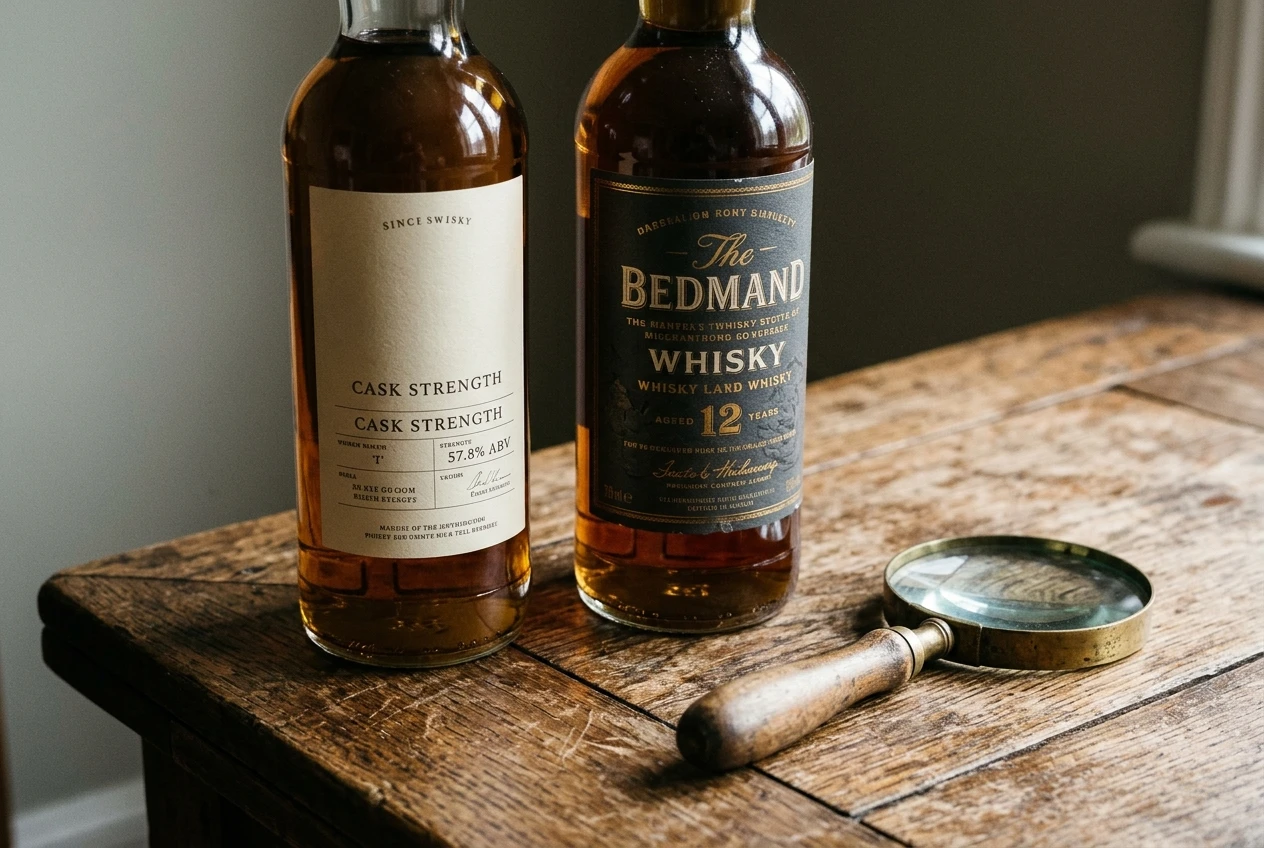
Bottling strength. Look at the ABV. Whisky bottled at 46% or higher is more often left unfiltered, because the strength resists haze. A bottle at 40% is more likely to have been chill filtered to stay clear. This is a tendency and not a rule, so treat it as a hint.
“Natural colour”. This phrase means no colouring has been added, which in Scotch usually refers to caramel colouring that some producers use to even out the shade from batch to batch. It is a separate matter from filtration. Even so, producers who go to the trouble of leaving out colouring and filtration often do both and say so together, as part of a less processed presentation.
Cask strength and single cask. Bottles labelled cask strength, or drawn from a single cask, are usually bottled at higher strengths and handled lightly, so they often come unfiltered. Again, check the label for confirmation.
The producer’s website. Distilleries often publish details about filtration and colouring for each expression. If the bottle is unclear, that is the most reliable place to look.
A few clues pointing the same way, such as a 46% strength, natural colour and an explicit filtration statement, give you a solid picture. One clue on its own proves little. For more on matching a bottle to your own preferences, see our guide on how to choose the best whisky for your taste.
Which should you buy? A simple way to taste the difference at home
Neither style is the right answer for everyone. If you mostly drink whisky with ice or a splash of water and care about a clear look, a chill filtered bottle will suit you. If you like a weightier, oilier texture and enjoy knowing the whisky is less processed, a non-chill filtered bottle is worth the search. Many people end up buying both, depending on the occasion.
The best way to know what you prefer is to test it. Here is a simple setup:
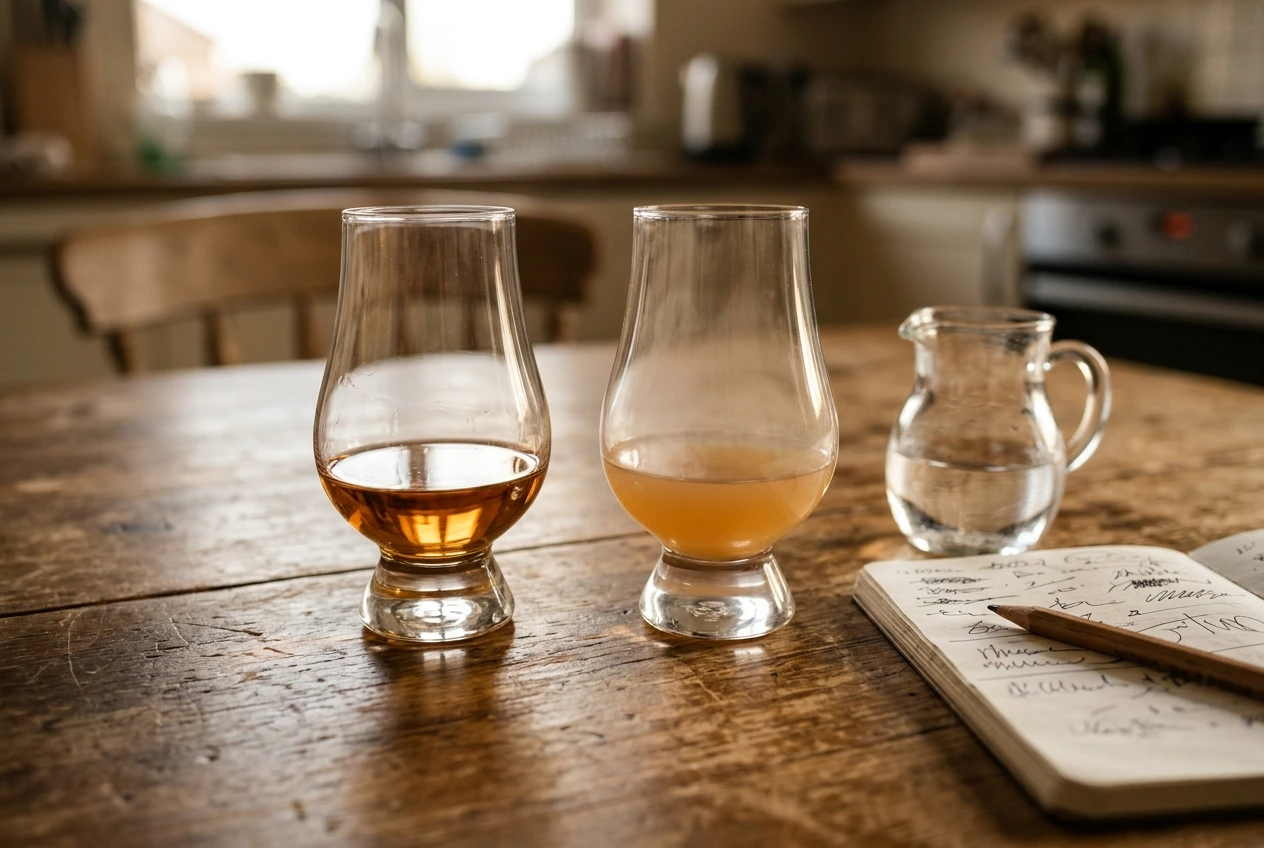
- Choose two bottles from the same distillery. Pick expressions that are as similar as you can find in age and style, with one chill filtered and one non-chill filtered. This keeps the distillery’s character the same, so filtration is the main variable.
- Match the strength. The non-chill filtered bottle is often stronger, and strength changes how a whisky tastes. Add a little water to the stronger one until the two feel similar in strength, or taste both neat first and then both with water.
- Pour equal measures into identical glasses. Use the same glass shape for both, because shape affects aroma.
- Taste blind if you can. Ask someone to pour and label the glasses on the bottom, so you do not know which is which.
- Focus on texture first. Notice how the whisky coats your mouth, how long the finish lasts and whether one feels oilier or fuller. Then compare aroma and flavour.
- Add a few drops of water and watch. See which glass clouds and whether the taste changes as it opens up.
Write short notes as you go. A page of honest impressions will tell you more than any label.
Try it yourself
Pick a chill filtered and a non-chill filtered bottle from the same distillery, try them side by side using the tasting tips in our guide on how to drink whisky properly, and have a look at the bottles we like.
Until next time
Sláinte
Tony

My name is Tony and I’m the creator of The Whisky Shed, a place where good drams meet good stories. From tasting notes to deep dives into distillery history, I share honest, approachable whisky knowledge for anyone who loves a great pour. Whether you’re exploring your first bottle or expanding a growing collection, my goal is to make whisky simple, enjoyable, and worth raising a glass to. Slàinte 🥃