
Peaty whisky has a reputation for being bold, smoky, and just a little mysterious. For anyone curious about what makes peaty whisky so unique, how it’s crafted, and where the most iconic bottles come from, I’ll break down everything you need to know right here.

What Is Peaty Whisky?
Peaty whisky gets its signature smoky flavour from peat, which is a type of ancient, decomposed plant matter that forms in wet, boggy areas. When the malted barley is dried over a fire fueled by burning peat, the barley absorbs the smoky aromas and earthy flavors. That peat smoke seeps in, and you end up tasting it in every sip of the whisky.
The term “peaty” describes a whisky with those smoky, earthy flavours, which can range from a gentle wisp of smoke to a taste that’s almost like a bonfire in your glass. Some people love that intensity, and others find it a bit much, but it’s definitely something that gives peaty whiskies their own personality. And what’s so interesting about this smoky note is that it creates a flavour signature you won’t easily find in other spirits, making every dram a small adventure into the roots of traditional distilling culture.
How Peaty Whisky Is Made
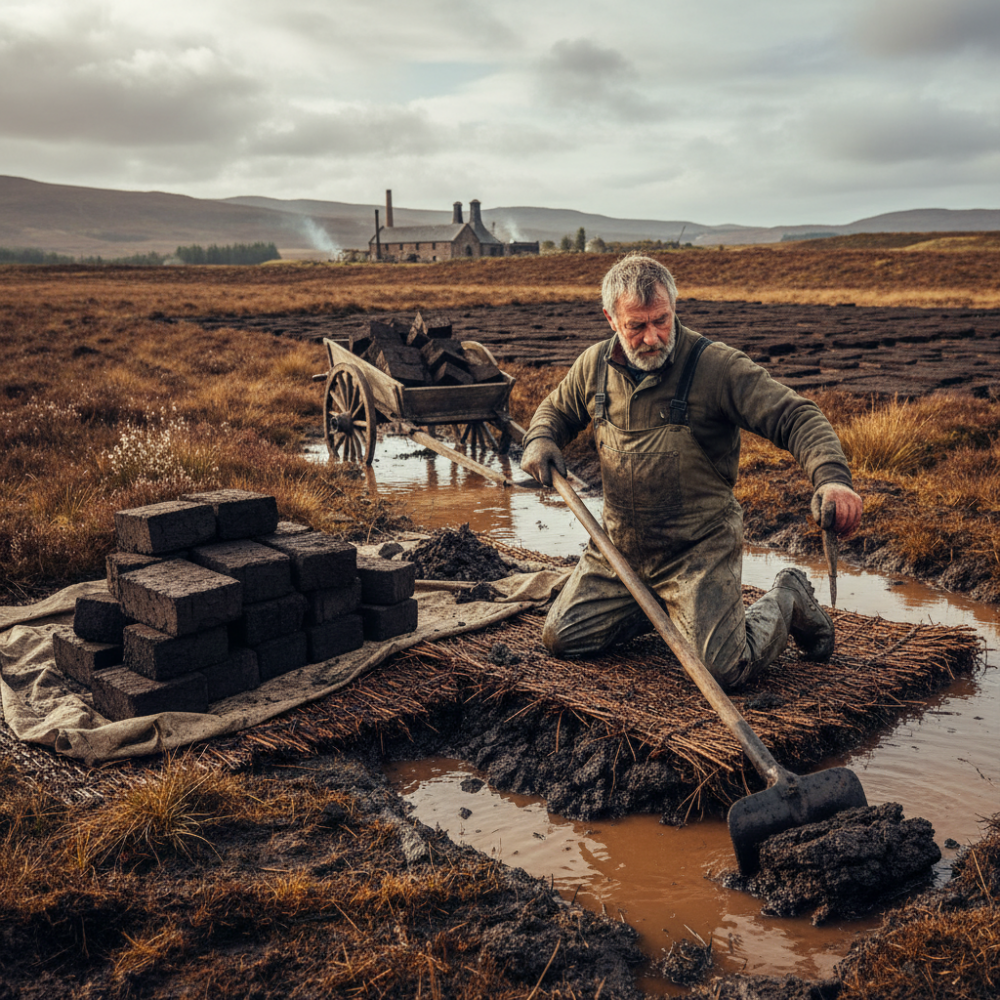
The adventure of peaty whisky starts with the harvesting of peat itself. Workers cut blocks of peat from bogs, which are left to dry before they’re used as fuel. Here’s how peat enters the process:
- Malted Barley: Peat comes in during the drying step at the distillery’s malting floor. The barley, soaked for germination, needs to be dried to stop it from sprouting further. Distillers burn the peat underneath the wet barley, and the smoke rises through the grains, giving them those unmistakable smoky and phenolic notes.
- Mash and Fermentation: The peated, smoky barley is then mashed and fermented like any other Scotch whisky, but the smoky flavours stay with it. The yeasts working during fermentation can also add fruity undertones and further layer the aroma profile, providing depth beyond just the smoke.
- Distillation: Distillation concentrates the peat flavors but also brings out fruitiness and smoothness in the whisky. Different distilleries have their own techniques and still shapes, which influence how bold or subtle the smoke comes through. For example, shorter stills often result in heavier, more robust drams, while taller stills might create a lighter spirit with subtler smoke.
- Cask Maturation: The whisky is matured in oak barrels, for at least three years (often much longer), which can mellow out the peat and introduce extra layers of flavour like vanilla, spice, or fruit. Sometimes, the casks themselves previously held sherry or bourbon, infusing the whisky with distinctive undertones that balance the peat’s power.
The amount of peat character in a whisky varies based on how much peat smoke the barley was exposed to and what kind of peat was used. The smoky phenols can be measured in parts per million (PPM), a handy way to compare bottles if you’re looking for big smoke or just a little hint.
The Flavour Profile of Peaty Whisky
The peatiness in whisky shows up on both the nose and palate. Here are some flavors and smells you’ll often find in peaty whisky:
- Bonfire smoke
- Earthy, mossy notes
- Medicinal (think band-aids or iodine, especially in Islay whiskies)
- Seaweed and brine (from distilleries near the ocean)
- Soot, charcoal, or even BBQ
- Sweeter notes like honey or dried fruits in more balanced peated whiskies
Some people pick up on a leathery or tarlike smell, which sounds strange but blends beautifully with the other flavours. Every bottle is a bit different, so this style of whisky has a lot of personality to offer. Because each distillery uses its own methods, you’ll find endless variety even among different batches from the same producer. If you’re just starting out, keep in mind that tasting a range of bottles is the best way to track down your favorite flavour balance.
Where Does the Best Peaty Whisky Come From?
When someone talks about peaty whisky, the conversation usually points straight to Scotland, and more specifically, the island of Islay. Peaty whisky isn’t limited to just one spot, though. Here are the key regions:
Islay: The Heart of Peaty Whisky
If you’ve heard of famous names like Laphroaig, Lagavulin, or Ardbeg, you’re already familiar with Islay, even if you don’t realize it. Islay whiskies are known for their strong, smoky, and sometimes seaside flavors. The island’s maritime climate, seaweed, and salty air all make their way into the whisky over time.
- Laphroaig: Known for its medicinal, seaweed-heavy style with intense peat smoke.
- Ardbeg: Delivers bold smoke, peat, and just a touch of lemon and spice.
- Lagavulin: Has a deep, smoky profile, softened by sweet and sherried flavors.
I’ve noticed that if anyone is chasing an unmistakably smoky whisky, Islay bottles are usually the first recommendation. But the Islay region itself has a range of options, from the lighter Caol Ila to the rich, sweet peat of Bowmore. Each distillery uses estate water, local peat, and unique equipment, meaning no two Islay malts are exactly the same. Visitors often leave the island with a newfound appreciation for how much the setting can shape a drink’s personality.

Other Scottish Regions
Islay doesn’t have a monopoly on smoke. Here are a few other Scottish areas making great peated drams:
- Highlands: Some distilleries, like Ardmore and Benriach, produce lightly peated whiskies with a more delicate smoke, often balanced by fruit and heather notes.
- Islands (excluding Islay): Talisker (from Skye) offers a peppery smoke, while Jura puts out a subtle peaty character. Orkney’s Highland Park adds heather peat for something slightly less pungent but very aromatic.
- Speyside: While Speyside is known for sherried, sweet whiskies, a few producers like Benromach dabble in gentle peat as well.
The range of peatiness found across Scotland means you can find a smoky bottle that fits precisely what you’re craving. From the mainland’s woodsy flavours to Skye’s stormy spice, every region steps up its take on peat in a special way.
Peated Whisky Beyond Scotland
Scotland set the bar, but peated whisky pops up in other countries too:
- Ireland: Distilleries like Connemara are making peated Irish whiskey with their own twist. Usually a bit fruitier and less briny than their Scottish cousins.
- Japan: Distillers such as Hakushu and Yoichi use peat to create refined, clean, and subtly smoky flavours.
- Other Countries: Sweden’s Mackmyra, Australia’s Lark, and several American craft distilleries have added peated releases in recent years. These tend to bring their own regional spin to the classic smoke profile, often exploring heritage grains and experimental barrel finishes to make each release stand out.
This global spread means peat lovers can stumble upon unexpected gems from places as far-flung as Tasmania, Iceland, or even India, each with its own climate-driven quirks and unique local flavour.

Why Some Whiskies Are More Peaty Than Others
The peat level in a whisky comes down to choices at the malting and distilling stages. Here’s why you’ll find so much difference between bottles:
- Peating Levels: The amount of peat smoke used during malting directly affects the final PPM (phenol parts per million) level. High PPMs mean punchy smoke; low PPMs are more subtle.
- Local Peat: Not all peat is the same. Islay peat has more seaweed and moss, while mainland peat is richer in woodier plants. The flavour of the smoke changes based on what’s burned, so two peated whiskies can taste wildly different even if they were made with the same process.
- Fermentation and Distillation: Longer fermentation can introduce new flavours that either hide or highlight the smoke. Some distilleries design their stills to preserve more peaty notes, while others tone it down. The craft comes in finding that sweet spot, matching smoke level to the kind of whisky they want to produce.
- Maturation: The type of cask used—bourbon, sherry, or new oak—can either balance the peat or make it even more pronounced. Older whiskies tend to mellow out, while younger ones can be sharp and punchy. Sometimes producers switch things up, finishing peated whisky in unusual barrels to add new flavours and complexity.
This mixing of different corn, rye, or wheat grains with peated malt in certain world whiskies further explodes the possibilities, showing that peated whisky isn’t only about Scottish tradition, but about experimentation as well.
Trying Peaty Whisky for the First Time
For anyone new to peaty whisky, the first sip can be a shock, but it gets more inviting with every taste. If you’re curious, here are a few friendly tips for getting into peat:
- Start in the middle: Instead of leaping straight to the peat monsters like Ardbeg or Laphroaig 10, try something a bit lighter—Talisker 10 (buy here)or Highland Park 12 (buy here). These whiskies introduce smoke without overwhelming your palate, and often balance with sweetness or spice.
- Add a splash of water: Peaty whisky can open up nicely with just a few drops of water, toning down the smoke and letting other flavours shine. Even seasoned whisky fans enjoy experimenting with dilution to see how the aroma changes.
- Pair it with food: Smoked meats, sharp cheeses, or even dark chocolate are great with a peaty whisky, making the flavours more approachable. Try it with grilled fish or even creamy desserts if you’re feeling adventurous.
- Be patient: It may take time to appreciate the complexity of peat. The smoky edge grows on most people, so don’t worry if you’re not instantly hooked. Sometimes a whisky you didn’t love on the first taste becomes a favourite after a few tries.
And remember, whisky tasting is personal—no two palates are the same. Take note of what you enjoy, and don’t be afraid to explore bottles beyond your initial preferences.
Things to Consider Before Buying Peaty Whisky
Picking out a peaty whisky isn’t just about being brave; it’s about figuring out what kind of smoky you enjoy most. Here are some things that can help you make a good pick:
- Peat Level: Check if the bottle mentions the PPM or just describes the flavour as “lightly peated” or “heavily peated.” Higher numbers mean more smoke, but a lower PPM can make for a more nuanced, versatile bottle.
- Flavour Balance: Islay whiskies can go from seasalt and brine (Lagavulin, Laphroaig) to earthysweet (Bowmore, Caol Ila). Highland and Japanese peated whiskies usually have more balance between fruit and smoke, which can be easier for newcomers.
- Price: Some of the best entry-level peated whiskies aren’t expensive. There are loads of affordable options under £60 that are worth checking out before splashing out on a rare bottle. It’s a good idea to sample with friends, or even at a whisky bar, before investing in a full-sized bottle.
- Distillery Reputation: Some distilleries consistently put out peated whiskies with a specific character. Reading reviews or tasting notes can help you find your preferred style, and some shops offer mini bottles or sample sets for discovery.
- Limited Edition vs. Regular Release: Jumping to a limited-edition bottle can be exciting, but core releases are more consistent and often better value for learning what you like. Once you know your preferred profile, then you can go after the rare and unusual releases with more confidence.
Peat and Smoke Aren’t the Same Thing
It’s helpful to know that peatiness and smokiness aren’t exactly the same. Some whiskies taste more like burnt wood (smoke) with very little earthy peat, while others are earthy and mossy with only mild smoke on the finish. Descriptions can be a little confusing, but tasting a few different bottles is the best way to get a feel for your preferences. If one bottle is too smoky for your tastes, try another with a lighter profile before giving up on peat altogether.
How to Store and Serve Peaty Whisky
Peaty whisky doesn’t need extra special storage; just keep it upright in a cool, dark place, like any good whisky. For serving, a classic tulip glass lets you really appreciate the nose by concentrating the aroma toward your senses. If the whisky is too bold, add a splash of water or an ice cube. There’s no wrong way to enjoy it, so feel free to try different serving styles until you find what works best for your taste.
Some enthusiasts also enjoy their peaty drams with food or as part of a tasting flight, comparing and contrasting with unpeated malts. No matter how you serve it, the important thing is to drink it on your own terms—let your palate lead the way.
Common Questions About Peaty Whisky
Here are some questions that come up regularly when someone’s exploring peaty drams for the first time:
Question: Does more peat mean better whisky?
Answer: Not always; more peat only means more smoke. Some drinkers love intense peat, while others prefer just a hint. Balance and complexity are just as important as raw smoke power.
Question: Is peaty whisky always smoky?
Answer: Almost always, but it can be subtle. Some whiskies use minimal peat, for a gentle background note instead of a bonfire blast. If you see “peated” on the label, there will be some smoky flavour involved.
Question: Are there peated whiskies outside of Scotland?
Answer: Absolutely! Ireland, Japan, Iceland, Tasmania, and the US all produce peated whiskies, with unique spins on the traditional style. Some world whiskies might even surprise you with their take on peat, so keep an eye out for new releases.
Question: What is the smoky flavour in whisky actually made of?
Answer: The smoke flavour comes from compounds called phenols in the peat smoke. Depending on the kind of peat and how much is used, you might taste everything from campfire to seaweed to rubber. Each region’s peat imparts its own set of tastes, making every bottle a discovery.
Question: Which peaty whisky should I try first?
Answer: Talisker 10, Highland Park 12, or Benromach 10 are great choices that mix peat with approachable sweetness and spice. If you’re feeling brave, jump to Ardbeg 10 or Laphroaig 10. There’s plenty to stumble upon at every level, so don’t be afraid to experiment.
Wrapping Up: Peaty Whisky in Perspective
Peaty whisky has a flavour that stands out and sticks with you. Whether you enjoy a smoky dram on a rainy evening or just want to try something with big flavour, peaty whisky makes an impact. Take your time exploring the different styles, try a few from different regions, and don’t stress if the first sip is a little wild. Each glass tells the story of ancient peat bogs, sea mist, and the hands that crafted it. If you stick with it, you’ll start to find nuances that turn that initial shock into genuine appreciation. Enjoy the adventure—you never know when you’ll stumble across a new favourite bottle.
Until next time,
Slàinte
Tony
I am an affiliate for several whisky companies and I earn a small commission if you purchase through my links. The price is the same but it helps me to continue creating content for you! For more info read my affiliate disclosure.

My name is Tony and I’m the creator of The Whisky Shed, a place where good drams meet good stories. From tasting notes to deep dives into distillery history, I share honest, approachable whisky knowledge for anyone who loves a great pour. Whether you’re exploring your first bottle or expanding a growing collection, my goal is to make whisky simple, enjoyable, and worth raising a glass to. Slàinte 🥃