Scottish whisky packs plenty of history and character into every bottle, but its real depth comes from the landscape itself. The distinct regions shape the flavours, aromas, and quirks found in your glass. When shopping for Scotch or even traveling in Scotland, knowing the different whisky regions makes it easier to pick out something you’ll actually enjoy.

The Main Scottish Whisky Regions Explained
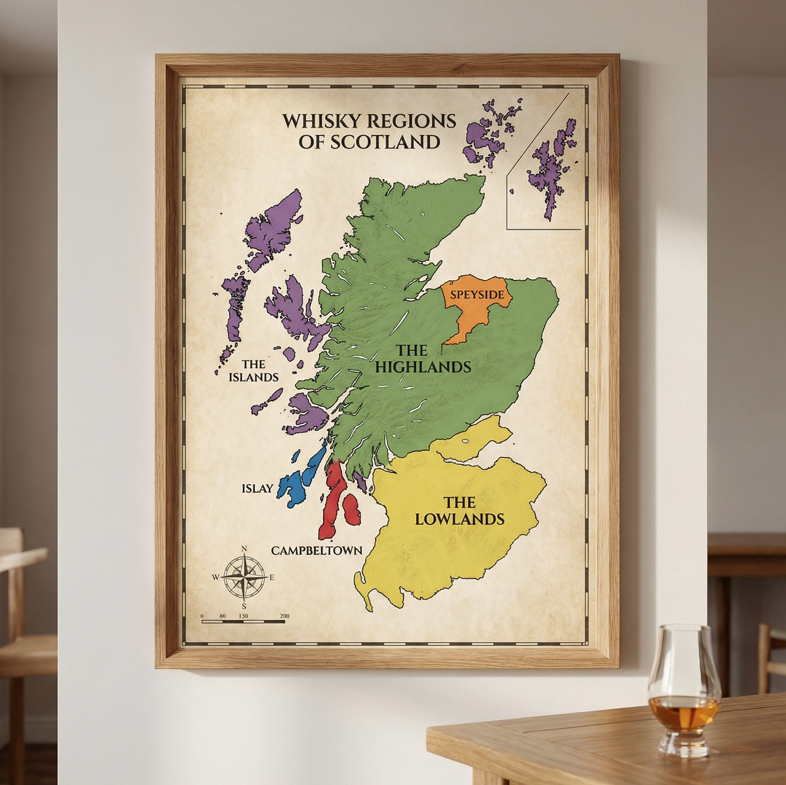
Each classic whisky region in Scotland brings something unique to the table. These regions—Speyside, Islay, Highlands, Lowlands, Campbeltown, and the Islands—aren’t just lines on the map. They help you understand the flavours, traditions, and personalities behind each bottle.
The different regions got their reputations thanks to everything from local water sources and climate, to how distilleries use peat or how close they are to the sea. The Scotch Whisky Association officially recognizes five whisky-producing regions, but most industry insiders include the Islands as a distinct area too.
Speyside Whisky Region
Speyside sits right in the heart of Scotland’s whisky map and packs the highest concentration of distilleries anywhere in the country. Some of the biggest names in Scotch, such as Glenfiddich and Macallan, are Speyside staples.
If you’re after something approachable and sweet, Speyside is a solid pick. Think flavours like honey, ripe orchard fruit, nuts, and vanilla. Speyside whiskies usually have little or no peat smoke, which is why a lot of people find them super easy to drink, especially if you’re new to the world of Scotch. The style is crowd-pleasing, often used as an entry point for those starting their whisky adventure.
For a deep dig into why Speyside whiskies win so many loyal fans, you can check out a full post about what makes Speyside special, featuring tasting tips and distillery highlights. From elegant Glenlivet to richly sherried Aberlour, there’s a lot to sample and appreciate across this region.
Highlands Whisky Region
The Highlands claims the largest area on the Scottish whisky map, and that gives it a lot of variety. Expect a range from delicate floral drams to bold and peaty pours, and everything in between. Famous Highland distilleries include Glenmorangie, Dalmore, and Oban.
This region spreads from Scotland’s rugged north to the rolling countryside near the Lowlands, so local flavours switch up depending on where the distillery sits. Coastal Highlands can offer briny or salty notes, while inland whiskies often come off richer or more malty. Sometimes you’ll stumble upon drams with a gentle smokiness, herbal qualities, or even bright citrus zest.
The Highlands also feature smaller craft distilleries that like to experiment, making each visit or tasting something of a new adventure. Because of its size, the Highlands really reward a bit of exploration if you enjoy trying new flavours. There’s more about the region’s whisky diversity and some recommended bottles in a dedicated Highlands guide, plus info on tours and festivals for the curious.
Islay Whisky Region
If you love a whisky with major personality, Islay will probably be your favourite region. This island, sitting off Scotland’s southwest coast, is famous for heavily peated, smoky malts. Names like Laphroaig, Ardbeg, and Lagavulin are Islay icons.
Islay whiskies can deliver aromas of smoke, seaweed, peat, salt, and even a medicinal quality that’s hard to find anywhere else. Some also show notes of iodine, leather, and seaspray. These bold flavours come straight from the local peat, which is often used to dry the malted barley, shaping the whisky’s character in every batch.
Not every Islay whisky is a peat bomb; some distilleries on the island dial it back and focus more on sweet or fruity notes, using ex-bourbon or sherry casks for mellow vanilla, caramel, and spiced fruit flavours. If you want to learn which ones to try, the Islay whisky post covers everything from smoke levels to hidden gems.
Lowlands Whisky Region
The Lowlands region stretches across Scotland’s southern border, and its whiskies are known for being light, grassy, and very soft compared to bolder Highland or Islay styles. Auchentoshan and Glenkinchie are two examples you’ll often spot at tastings and bars.
Flavors here tend to be delicate and floral. Think fresh-cut grass, citrus, and even a touch of creaminess. Some Lowland malts work great for those new to Scotch, or as a relaxed sip for folks who usually prefer lighter spirits like gin, vodka, or white rum.
A cool fact about Lowland distilleries: a few keep up the practice of triple distillation, which adds even more smoothness to the finished whisky. There’s a separate Lowlands region article for more details on traditional techniques, visiting newer craft distilleries, and food pairings that complement these gentle whiskies.
Campbeltown Whisky Region
Campbeltown, once called the “whisky capital of the world,” used to be home to over 30 distilleries. These days, only a handful remain. Springbank, Glen Scotia, and Glengyle will probably pop up most often in shops or tastings.
Campbeltown whiskies often deliver a mix of maritime notes, rich malt flavours, brine, and sometimes a little peat. There’s usually a funky, oily edge and a savory vibe you don’t always find elsewhere. A sip of Campbeltown whisky stands out, and some people even call the style slightly salty or coastal, thanks to the town’s location on the windswept Kintyre peninsula.
This region now has a big fanbase among whisky collectors and anyone who loves something quirky or different. For more on why Campbeltown is worth exploring, check out the full Campbeltown feature, which also includes historical trivia and distillery visit ideas.
The Islands Whisky Region
While not officially recognized by Scotch regulators, the Islands (excluding Islay) have such a different style that most fans treat them as a region on their own. This group includes distilleries on places like Skye, Orkney, Jura, Arran, and Mull. Each island lends a different twist to the whisky produced there.
Island whiskies often hit that sweet spot between smoky and sweet, frequently with a salty or maritime tang. Distilleries like Highland Park (Orkney), Talisker (Skye), and Tobermory (Mull) each bring something distinctive. Think peat smoke, heather, honey, spice, and sea spray, combined with the most breathtaking coastal scenery Scotland has to offer.
Fans often get a sense of elemental power from these drams, as the wild climate and ocean breeze shape the oak casks in real time. There’s more on how island life shapes these whiskies and what bottles to try first in a full Islands whisky guide.
How the Regions Affect Scotch Whisky Flavor
Scottish whisky regions matter for a few big reasons. Climate, geography, and local traditions all influence how the whisky tastes. For example, island whiskies get their brininess from sea air, while a Speyside pour might taste like apples and honey thanks to less peat and sweeter water sources.
Even though there’s overlap and some distilleries break the rules, learning the basic region profiles helps you avoid picking a bottle that isn’t your thing. Whether you like a gentle Lowland dram or a bold Islay peat blast, starting with the region usually gets you closer to what you’ll enjoy. Exploring these regional contrasts can make whisky tasting feel fresh every time you pour a new glass.
Choosing a Region for Your First Scotch
If you’re new to Scotch whisky and want an easy start, Speyside and Lowlands are usually the safest for approachable flavours. Those after something smoky usually look for Islay or some Islands malts, while fans of richer, spicier drinks should get into Highlands or Campbeltown choices.
Most whisky lovers eventually try all the regions at least once. You can experiment with tasting flights, order miniatures online, or plan a trip to see the local flair in person. Also, there are whisky tasting clubs and online livestreams that focus on region-based flights, which give you a great place to start. Joining a tasting group or subscribing to a regional whisky box can keep your palate engaged and help you spot new favourites without huge investments.
Frequently Asked Questions about Scottish Whisky Regions
What’s the biggest whisky producing region in Scotland?
The Highlands is the largest by area, but Speyside has the most distilleries and bottles most of Scotland’s whisky.
Are the Islands an official whisky region?
No, the Islands are not officially recognized by the Scotch Whisky Association, but most drinkers and experts treat them as a separate region due to their unique flavours and history.
Which region makes the smokiest whisky?
Islay is the go-to for smoke and peat, but the Islands and some parts of the Highlands also make smoky malts.
Is there a peated whisky from every region?
Not every region specializes in peat, but you can find lightly peated whiskies from the Highlands, Islands, and even a few from Speyside or Campbeltown.
Wrapping Up: Finding Your Favorite Scotch Region
Scottish whisky regions offer a simple but powerful way to stumble upon what you like. Each area brings its own personality and signature flavours, so it’s worth exploring all of them at your own pace. Try tasting single malts from every region and see which one fits your own taste. There’s no wrong answer and always something new to track down, giving your whisky adventure endless possibilities.
Where does your favourite whisky come from?
Until next time, Slàinte
Tony

My name is Tony and I’m the creator of The Whisky Shed, a place where good drams meet good stories. From tasting notes to deep dives into distillery history, I share honest, approachable whisky knowledge for anyone who loves a great pour. Whether you’re exploring your first bottle or expanding a growing collection, my goal is to make whisky simple, enjoyable, and worth raising a glass to. Slàinte 🥃