
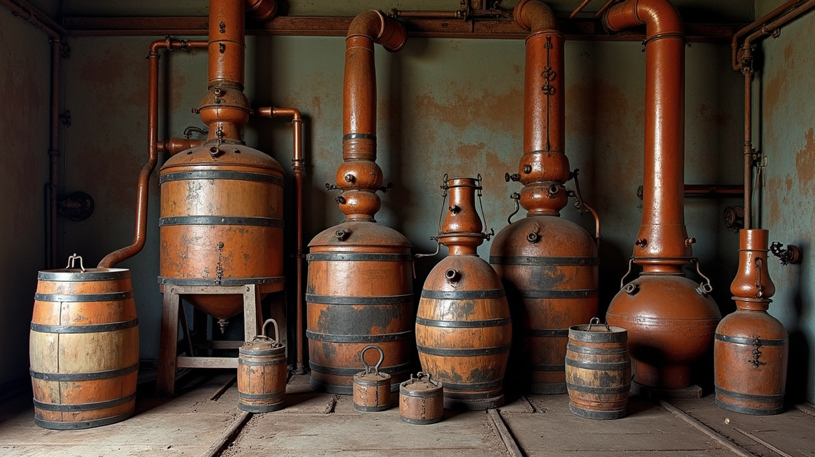
Whisky production underwent a profound transformation during the Industrial Revolution. As factories and mechanization began to influence traditional methods, whisky makers had to adapt to new techniques and technologies. The transition not only boosted production capacity but also reshaped the quality and consistency of whisky. Enjoy this all-in-one look into how the Industrial Revolution changed the face of whisky making.
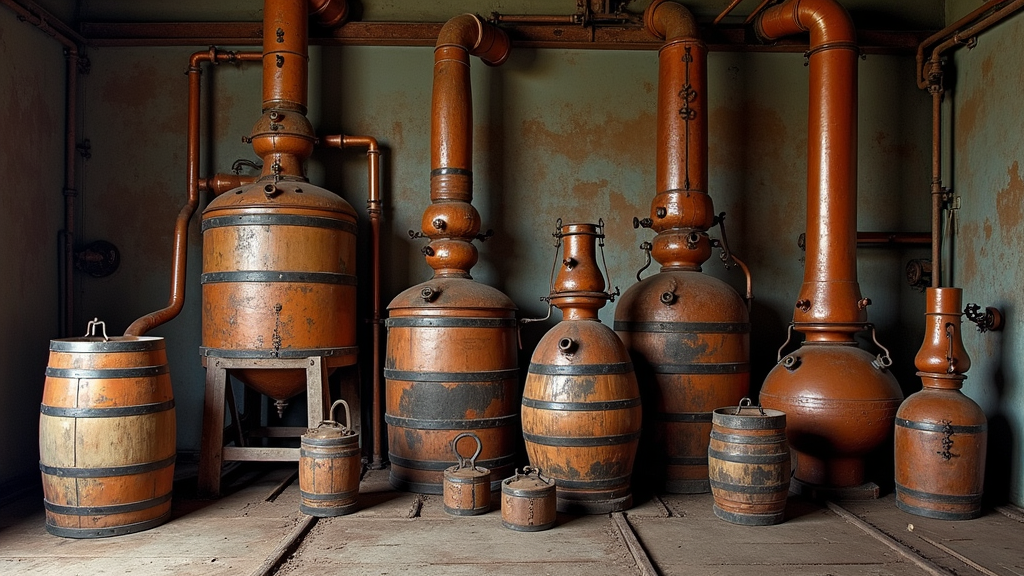
Mechanization and Its Early Influence
The Industrial Revolution brought about a switch from artisanal crafting to mechanized processes. Before this era, whisky making was a craft passed down through generations with methods that varied from batch to batch. The introduction of steam power and improved machinery allowed whisky makers to produce larger quantities with more consistent results. As new equipment and methods were adopted, many traditional practices faced changes and adaptations.
This period saw a surge in demand as whisky became accessible to a broader market. Instead of the small, home-based distilleries of the past, larger factories began to emerge. These establishments focused on maximizing efficiency while attempting to maintain the unique flavors that enthusiasts loved. The scale of production grew, and with it, new challenges arose in preserving quality while increasing output.
Historically, this transformation required not only adopting new machinery but also rethinking how production was organized. Distillers had to adjust recipes and processes to work with faster production speeds. The human touch was gradually supplemented by the precision of mechanical operations, creating a blend of tradition and modernity that would set the stage for future innovations.
Innovations in Distillation Techniques
The introduction of technologically advanced equipment marked a turning point in whisky production. One of the most significant changes was the modernization of the distillation process. Traditional pot stills, once hand-heated over open flames, were replaced with more controlled and efficient designs. The development of continuous distillation techniques allowed distillers to produce whisky in larger quantities, while still drawing on the rich history of their craft.
Key improvements during this time included better temperature regulation and innovations such as the introduction of copper stills. Copper became a favored material for distillation because it gives a boost to flavor by removing sulfur compounds and helps in better heat conduction. Although these advancements meant that traditional methods were pushed aside in many areas, they also paved the way for modern quality controls that ensure consistency for whisky lovers around the world.
In addition to the physical changes in machinery, producers rethought the overall process. They experimented with varied designs and configurations to match the soaring demand while preserving as much of the traditional character as possible. This period was marked by a merging of practice and precision, where age-old wisdom met cutting-edge technology.
The Industrial Revolution’s Broader Impact
The influence of the Industrial Revolution on whisky production is not only seen in the technological changes but also in the way the industry expanded. Industrialization spurred the growth of transportation networks, allowing for easier distribution of whisky both locally and internationally. Better roads, railways, and steamships helped distilleries reach new markets and consumers, broadening the appeal of whisky.
Additionally, standardization in production methods led to a more uniform product. Whereas earlier buyers might have encountered variations from batch to batch, the Industrial Revolution ushered in an era where whisky could be expected to taste much the same regardless of when or where it was produced. This consistency was very important for building brand trust and establishing global markets.
The rise of industrial methods also meant that once-obscure regional styles of whisky began to gain recognition. In cities that were hubs of industrial activity, large-scale distilleries emerged and became synonymous with quality and efficiency. These changes not only revolutionized production but also influenced cultural perceptions of whisky around the world.
Moreover, as rustic techniques gave way to mechanization, regional identities began to blend. New distribution channels allowed consumers to sample whiskies from distant lands, sparking an early form of global whisky culture. This integration of markets laid the groundwork for a thriving international trade in spirits.
Key Technological Advances in Whisky Making
The shift to mechanization brought several noteworthy technological advancements that shaped whisky production. Below is a look at some of the cool features that many distilleries adopted during the Industrial Revolution:
- Copper Stills: Copper became a favored material for distillation. It gives a boost to flavor by removing sulfur compounds and helps in better heat conduction.
- Steam Power: The introduction of steam engines allowed distilleries to operate continuously and scale up production. This was a game changer for large-scale whisky making.
- Temperature Control: Mechanized systems improved the ability to monitor and control temperature during distillation, thereby fostering consistency and quality in every batch.
- Automation in Bottling and Packaging: Automated systems helped in packaging whisky efficiently. This not only sped up the process but also ensured uniform labeling. Improved presentation for consumers became an added benefit as well.
These technological upgrades did more than just improve efficiency. They also established a standard that modern distilleries continue to follow. While the romance of hand-crafted whisky remains popular, industrial methods allowed a level of precision and uniformity that many discerning drinkers appreciate.
Challenges and Adaptations in the Whisky Trade
Despite the many benefits, the Industrial Revolution also presented challenges that distillers had to overcome. One major issue was the struggle to maintain the character and flavor of whisky during the transition from small-scale to factory-based production. Traditional techniques were often intertwined with local customs and rites, and their mechanized versions sometimes led to a loss of regional uniqueness.
Another challenge was responding to the rapid growth in production volume. With the introduction of continuous distillation and other mechanized methods, some distilleries grappled with maintaining quality control. The risk of overproduction sometimes meant that quality could be compromised if not carefully monitored.
Distillers responded by refining their processes and implementing stricter quality control measures. Innovations in cask aging and blending techniques emerged as strategies to ensure that even large batches of whisky maintained a desirable smoothness and flavor profile. The balance between mechanization and the art of whisky crafting became a central focus during this era.
Government regulations also started to play a role during this period. Standards began to be imposed on production methods to protect consumers. Although these new rules initially seemed restrictive, they ultimately helped secure a reputation for reliability and consistent quality that modern whisky producers enjoy today.
Additional research into production practices led to better documentation of recipes and processes, ensuring that critical techniques were not lost in the rush for efficiency. Distillers began to hold workshops and round-table discussions, literally getting involved in sharing knowledge to overcome the hurdles introduced by mechanization.
Modern Perspectives on Industrial Advances
The effects of the Industrial Revolution are still felt in modern whisky production. Despite ongoing innovations in the industry, many of the foundational changes from that era remain influential. Contemporary distilleries continue to use the technological principles established during industrialization, albeit with methods adapted for current tastes and standards.
For example, modern distilleries benefit from automated production lines that not only provide consistency but also ensure greater safety for workers. Advanced monitoring systems and computerized controls help manage every stage of production with impressive precision. While these techniques drive efficiency, many producers also give a nod to traditional methods by incorporating hand-finished barrels and small-batch processes.
Today, the balance between tradition and technology is better understood than ever before. Distilleries have learned that while mechanization offers many benefits, the art of whisky production still relies on the delicate mix of science and craftsmanship. This blend honors the rich heritage of whisky making even as it steps up to meet modern challenges.
The industry has also seen a resurgence in appreciating regional variations and unique methods from smaller producers. Recognizing that every distillery has its own story, modern techniques are often used to preserve the distinctive qualities of each whisky, ensuring that history is never forgotten amid the advances of technology.
Advanced Insights on Evolving Whisky Making Techniques
Dig into deeper aspects of the evolution of whisky production reveals further advances that were inspired by the early changes of the Industrial Revolution. Distillers began to experiment with new types of grains, varied fermentation times, and innovative aging techniques as mass production demanded tighter oversight and more consistency.
Here are a few advanced points that highlight how industrial changes spurred further innovation:
Stepped-up Fermentation Processes: Innovations in temperature control and consistency in fermentation paved the way for experiments with different yeasts and grains. Maintaining a precise environment during fermentation is very important in creating flavor profiles that can be reliably replicated with each batch. This scientific approach helped in preserving the characteristic notes that whisky drinkers expect.
Precision in Barrel Aging: Mechanization not only influenced the distillation process but also affected how whisky is aged. The use of controlled environments in warehouse settings helped optimize the aging process, ensuring that the whisky develops complexity while retaining its signature flavor. Refinements in barrel-making techniques contributed significantly to quality improvements.
Blending Techniques: With increased production volumes, blending whisky from different batches became essential to achieve a consistent taste. Advanced blending strategies were developed to balance character and uniformity in the final product. Distillers took great care to combine elements from various stages of production to create a harmonious spirit that met modern standards while still reflecting traditional roots.
These insights illustrate that although the Industrial Revolution set in motion a wave of mechanization, modern whisky production continually builds on that legacy. Each advancement, from stepped-up fermentation to precision barrel aging, is part of a long tradition of innovation in an industry that values both its storied past and its ever-changing future.
Frequently Asked Questions
This section takes a closer look at some frequent queries regarding the Industrial Revolution’s impact on whisky production.
Question: How did the Industrial Revolution change traditional whisky making methods?
Answer: The shift from small-scale, handcrafted production to mechanized processes allowed for increased efficiency and consistency. Innovations such as steam power, copper stills, and automated bottling played major roles in transforming the industry.
Question: In what ways did transportation improvements affect the whisky industry?
Answer: Advances in transportation networks, including railways and steamships, allowed distilleries to reach broader markets. This helped whisky become a major export. Better distribution systems also sparked increased competition among producers.
Question: Did industrial advances affect the flavor of whisky?
Answer: Yes, the introduction of mechanized techniques improved overall consistency in flavor, even though some traditionalists feel that the artisanal character was diminished. Modern methods have found ways to balance efficiency with preserving distinctive tastes.
Question: How do modern distilleries combine traditional methods with industrial processes?
Answer: Many modern producers integrate automated systems with time-honored practices such as barrel aging and hand-finishing. This balance ensures both reliability and the preservation of unique taste profiles, keeping the spirit’s heritage alive.
Summarizing Thoughts on a Transformative Era
The Industrial Revolution’s influence on whisky production is a story of adaptation and progress. Mechanization enabled whisky makers to produce larger quantities while maintaining a level of consistency that helped build trust with consumers. Though there were challenges along the way, each obstacle led to inventive solutions that paved the way for today’s whisky industry.
Modern whisky production owes much to the blending of industrial innovations with traditional craftsmanship. Distilleries continue to innovate, using advanced techniques alongside methods passed down through generations. Whether it is the precise control of fermentation temperatures or the meticulous aging process, the legacy of this transformative era remains central to how whisky is made today.
The ride from small, local producers to large, mechanized operations is a fascinating reminder of how technology can change an industry. Whisky, once a regional specialty, now enjoys global appreciation largely thanks to the early advances seen during the Industrial Revolution. The progress made during this period has given whisky makers the tools to both replicate and refine their age-old traditions.
For lovers of whisky and those curious about its history, the story of industrial innovation is a testament to human ingenuity. The shift to mechanized production not only increased efficiency but also opened up opportunities for creative improvements in flavor and technique. Modern distilleries continue to navigate the challenges of preserving tradition while embracing new methods and ideas, ensuring that every sip carries a taste of history alongside contemporary excellence.
The Future of Whisky Production
Looking forward, the whisky industry is poised to blend further innovation with time-tested techniques. As advances in automation and quality control continue to evolve, distillers are experimenting with sustainable practices and energy-efficient production methods. This next stage is not just about increasing output; it is about respecting the past while adapting to environmental challenges and consumer trends.
Innovative technologies, such as artificial intelligence for monitoring fermentation and advanced sensors for aging, are starting to make their appearance in modern distilleries. These developments promise to speed things up and improve real-time quality management, while still allowing the art of whisky making to shine through.
Additionally, there is a growing focus on sustainability. Many distilleries are exploring renewable energy sources, waste reduction techniques, and water recycling programs. These initiatives aim to lower the environmental footprint of large-scale whisky production, ensuring that the industry can continue to thrive for generations to come.
This glimpse into the future underscores that the evolution of whisky production is an ongoing adventure. Distillers are not only preserving a rich legacy but also actively shaping what comes next—a future where tradition and innovation continue to mix, creating whiskies that are both rooted in history and engineered for modern tastes.
Wrapping Up
The impacts of the Industrial Revolution on whisky production continue to be very important in today’s world. From mechanization to modern automation, every phase of development has contributed to the creation of a spirit that balances consistency with character. As the industry moves forward, it remains a beautiful blend of science, art, and history.
This exploration of whisky’s evolution shows that progress and tradition are not mutually exclusive. Instead, they work together to produce an experience that is as much about heritage as it is about innovation. Every bottle of whisky tells a story of transformation—a story that is still being written.
Why not enjoy a dram of your favourite whisky and check out the rest of my articles.
Thanks for reading
Tony

My name is Tony and I’m the creator of The Whisky Shed, a place where good drams meet good stories. From tasting notes to deep dives into distillery history, I share honest, approachable whisky knowledge for anyone who loves a great pour. Whether you’re exploring your first bottle or expanding a growing collection, my goal is to make whisky simple, enjoyable, and worth raising a glass to. Slàinte 🥃