There is no bad whisky. There are only some whiskies that aren’t as good as others. Raymond Chandler
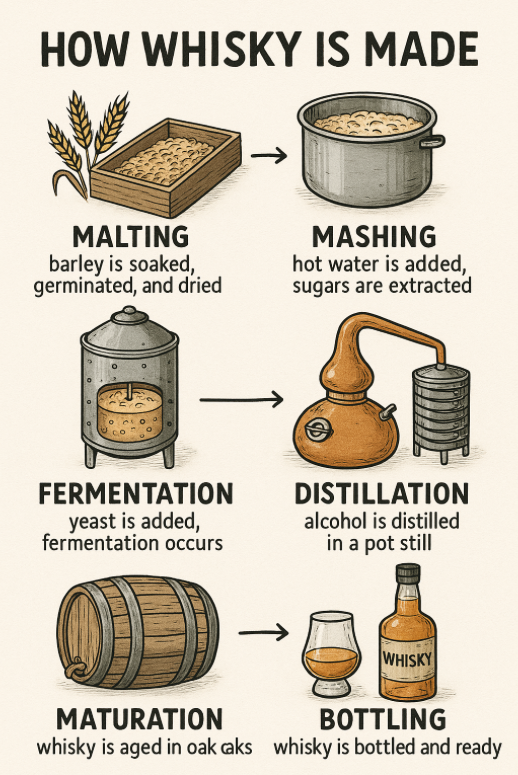
Whisky — the ‘water of life’ — is much more than just a drink. Behind every dram lies centuries of craft and careful science. So, how is whisky made? Whisky production involves several key steps. First, barley is malted by soaking it in water, allowing it to germinate, and then drying it in a kiln. The malted barley is mashed with hot water to convert its starches into fermentable sugars, creating a liquid called wort. Yeast is added to the wort to ferment the sugars, producing alcohol and CO₂. This liquid, now called wash, is distilled in copper stills to increase the alcohol content and refine flavors. Finally, the spirit is aged in oak barrels, where it develops its complex character before being bottled and enjoyed.
The Art and Science of Whisky Craftsmanship
Whisky, often referred to as the “water of life,” or in latin “aqua vitae” is a spirit that embodies both rich tradition and meticulous craftsmanship. The process of making whisky is a delicate balance of art and science, where ancient practices meet modern innovation. This article will explore the intricate journey of whisky making, delving into each step from the malting of barley to the final bottling, and highlight the cultural significance and craftsmanship behind every bottle.
Defining Whisky and Its Cultural Significance
Whisky is a distilled alcoholic beverage made from fermented grain mash, which may include barley, corn, rye, and wheat. It is aged in wooden casks, typically oak, which imparts distinctive flavors and characteristics to the spirit. Whisky is produced in various regions around the world, each with its unique styles and traditions, including Scotch whisky, Irish whiskey, American Bourbon, and Canadian whisky.
The cultural significance of whisky cannot be overstated. It has been a part of social rituals and celebrations for centuries, symbolizing hospitality, craftsmanship, and tradition. In Scotland and Ireland, whisky is deeply intertwined with national identity and heritage. In the United States, Bourbon is celebrated as a distinctly American spirit with a rich history. Across the globe, whisky enthusiasts appreciate its complexity and the stories behind each distillery.
Overview of the Whisky-Making Process
The journey from grain to glass involves six key stages:
1️⃣ Malting: Turning Barley Into Malt
2️⃣ Mashing: Extracting Fermentable Sugars
3️⃣ Fermentation: Creating Alcohol and Flavors
4️⃣ Distillation: Refining the Spirit
5️⃣ Maturation: Developing Character in Oak
6️⃣ Bottling: Preparing Whisky for Enjoyment
The Importance of Tradition and Innovation in Whisky Production
Tradition and innovation are both cornerstones of whisky production. Traditional methods, passed down through generations, ensure the preservation of unique regional characteristics and flavors. For example, the use of pot stills in Scotland or the Lincoln County Process in Tennessee.
Innovation, on the other hand, drives the evolution of distillation. Distillers experiment with new grain varieties, yeast strains, and cask types to create novel expressions. Modern technology enhances quality control and efficiency, while sustainability practices are increasingly adopted to reduce environmental impact.
Malting: The Foundation of Flavour
What is Malting and Why It’s Crucial for Flavour?
Malting is the process of converting barley into malted barley, which is essential for producing fermentable sugars. This stage significantly influences the flavor profile of the whisky. The enzymes developed during malting break down the starches in the barley into simpler sugars, which will later be fermented into alcohol.
The Process of Germinating and Drying Barley
- Steeping: Barley grains are soaked in water to initiate germination. This typically takes 2-3 days, during which the barley absorbs moisture and begins to sprout.
- Germination: The soaked barley is spread out on malting floors or in germination boxes, where it is allowed to sprout. This process lasts about 4-6 days, during which enzymes convert starches into fermentable sugars.
- Kilning: Germination is halted by drying the malted barley in a kiln. The temperature and duration of kilning can vary, influencing the malt’s flavor. In Scotland, peat smoke is often used, imparting a distinctive smoky flavor to the malt.
How Malting Influences the Character of the Final Product
The malting process lays the foundation for the whisky’s flavor. The degree of kilning can produce a range of flavors from light and grassy to dark and roasted. The use of peat during kilning adds a smoky, earthy character. The type of barley and the conditions of germination and drying all contribute to the complexity and uniqueness of the final product.
Mashing: Extracting the Sugars
Transitioning from Malting to Mashing
Once the barley has been malted and dried, it is ground into a coarse flour known as grist. The grist is then mixed with hot water in a process called mashing. This mixture is stirred to ensure that the enzymes from the malt efficiently convert the remaining starches into fermentable sugars.
The Role of Hot Water in Extracting Fermentable Sugars
Mashing involves several stages of adding hot water at different temperatures. The initial water addition, typically around 60-70°C, activates enzymes to break down complex carbohydrates into simpler sugars. Subsequent additions, at higher temperatures, help extract these sugars into a liquid called wort. The temperature and duration of mashing are crucial for maximizing sugar extraction and influencing the flavor profile.
The Significance of the Mash Bill in Flavor Distinction
The mash bill, or the mixture of grains used, plays a significant role in defining the flavor of the whisky. While single malt whisky uses 100% malted barley, other types like Bourbon and Rye whisky incorporate different proportions of corn, rye, and wheat. Each grain contributes distinct flavors and textures, creating a wide spectrum of whisky styles and expressions.
Fermentation: Bringing the Spirit to Life
Introducing the Fermentation Vats
After mashing, the wort is transferred to fermentation vats, which can be made of wood or stainless steel. Here, yeast is added to the wort to begin the fermentation process. The choice of fermentation vessel can influence the character of the whisky, with wooden vats often imparting subtle additional flavors.
How Yeast Transforms Sugars into Alcohol and Flavors
Yeast is a microorganism that plays a pivotal role in whisky production. During fermentation, yeast consumes the fermentable sugars in the wort and converts them into alcohol, carbon dioxide, and various flavor compounds. These flavor compounds, known as congeners, are crucial for the complexity and depth of the final product.
The Duration of Fermentation and Its Impact on Whisky Complexity
The fermentation process typically lasts between 48 to 96 hours. A longer fermentation period allows for the development of more complex flavors, as yeast produces a wider array of congeners. Shorter fermentation can result in a cleaner, more straightforward spirit. Distilleries carefully control fermentation time to achieve their desired flavor profiles.
Distillation: Refining and Purifying
The Distillation Apparatus and Its Historical Evolution
Distillation is the process of purifying the fermented liquid, or wash, by heating it to separate alcohol from water and other components. This is achieved using stills, which have evolved over centuries. The two main types of stills used in whisky production are pot stills and column stills.
- Pot Stills: Traditional and often used in Scotch whisky production, pot stills consist of a large, bulbous base and a long neck. The wash is heated, and alcohol vapors rise through the neck and condense into liquid form. Pot stills are usually used for batch distillation.
- Column Stills: Also known as continuous stills, these are more efficient and can produce higher-proof spirits. They consist of a series of stacked plates, allowing for continuous distillation. Column stills are commonly used in Bourbon and grain whisky production.
The Process of Separating Alcohol from the Wash
Distillation typically involves two stages:
- First Distillation (Wash Still): The wash is heated in the wash still, where it is separated into a low-alcohol liquid called “low wines” and a residue called “pot ale.”
- Second Distillation (Spirit Still): The low wines undergo a second distillation in the spirit still. This process further refines the alcohol, separating it into three parts: heads (foreshots), hearts (middle cut), and tails (feints).
Understanding the Cuts: Heads, Hearts, and Tails
- Heads (Foreshots): The initial fraction of the distillate, containing undesirable compounds like methanol. These are usually discarded.
- Hearts (Middle Cut): The desirable portion, rich in ethanol and flavor compounds. This fraction is collected and used for aging.
- Tails (Feints): The final fraction, containing heavier compounds. These are often recycled into the next distillation batch.
The skill of the distiller lies in making precise cuts to ensure only the best part of the distillate, the hearts, is retained for maturation.
Maturation: Developing Complexity in Oak
The Importance of Casks in the Maturation Process
Maturation is where whisky gains much of its character and complexity. The new make spirit is transferred to oak casks, where it interacts with the wood over several years. The type of cask and its previous contents (such as Bourbon, sherry, or wine) significantly influence the flavor profile of the whisky.
How Time and Environment Affect the Whisky’s Characteristics
During maturation, whisky undergoes several transformations:
- Extraction: The spirit extracts compounds from the wood, such as tannins, lignins, and vanillin, which contribute to flavors like vanilla, caramel, and spice.
- Oxidation: Interaction with air through the cask’s porous wood softens the spirit, developing complexity and reducing harshness.
- Concentration: Evaporation of water and alcohol, known as the “angel’s share,” concentrates the flavors in the whisky.
The environment, including temperature and humidity, plays a crucial role. Warmer climates accelerate maturation, while cooler climates result in slower, more gradual aging.
The Laws and Regulations Governing Whisky Aging
Different regions have specific regulations regarding whisky aging. For example:
- Scotch Whisky: Must be aged in oak casks for a minimum of three years.
- Bourbon: Must be aged in new charred oak barrels, with no minimum aging requirement, but often aged for at least two years.
- Irish Whiskey: Must be aged for a minimum of three years in wooden casks.
These regulations ensure the quality and authenticity of the whisky produced in each region.
Bottling: From Barrel to Glass
Once the whisky has reached its desired maturity, it is carefully removed from the cask, often diluted to desired strength, and sometimes filtered before being prepared for bottling. This process involves several steps to ensure the whisky is in perfect condition for consumption.
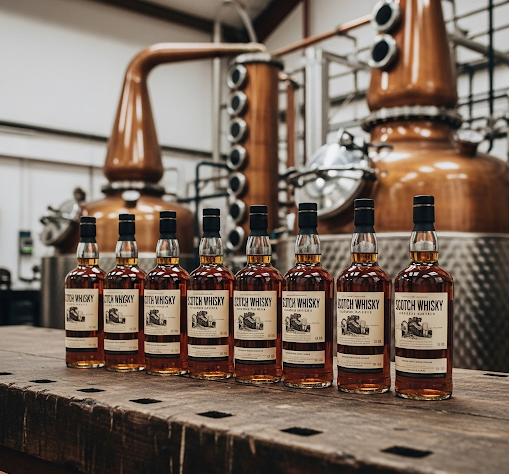
The Role of Non-Chill Filtration and Its Effect on the Final Product
Non-chill filtration is a method used to remove impurities and prevent cloudiness at low temperatures. While chill filtration can strip away some flavor compounds, non-chill filtration retains more of the whisky’s natural character and complexity. Many connoisseurs prefer non-chill-filtered whisky for its fuller mouthfeel and richer flavor profile.
Labeling Regulations and What They Tell Us About the Whisky
Whisky labels provide valuable information about the product, including:
- Age Statement: Indicates the youngest whisky in the bottle.
- Alcohol by Volume (ABV): The strength of the whisky.
- Region of Origin: Specifies where the whisky was produced, which can hint at its flavor profile.
- Cask Type: Details about the casks used for aging, such as ex-Bourbon or sherry.
Regulations ensure that labels are accurate and provide consumers with essential information to make informed choices.
FAQs
What’s the difference between whisky and whiskey?
Generally, “whisky” is used in Scotland, Canada, and Japan, while “whiskey” is the spelling in Ireland and the U.S.
What makes Scotch smoky?
Peat smoke is used to dry the malted barley, infusing it with earthy, smoky notes.
How long does whisky age?
It varies by region and style — anywhere from three years to decades.
What is single malt whisky?
A single malt comes from one distillery, made from 100% malted barley, distilled in pot stills.
Conclusion: Savoring the Craft
Whisky making is a harmonious blend of science, art, and history. From the careful selection of grains to the patient aging in oak casks, every step in the process contributes to the magic of the final product. Understanding the craftsmanship behind whisky enhances the appreciation of each sip, revealing the dedication and skill that go into creating this remarkable spirit.
As you explore the world of whisky, remember to savor the diversity of flavors and styles. Enjoy whisky responsibly, and let each bottle tell its unique story of tradition, innovation, and passion. Cheers to the enduring craft of whisky making and the continuous discovery of new and exciting expressions!
All the best
Tony

My name is Tony and I’m the creator of The Whisky Shed, a place where good drams meet good stories. From tasting notes to deep dives into distillery history, I share honest, approachable whisky knowledge for anyone who loves a great pour. Whether you’re exploring your first bottle or expanding a growing collection, my goal is to make whisky simple, enjoyable, and worth raising a glass to. Slàinte 🥃