
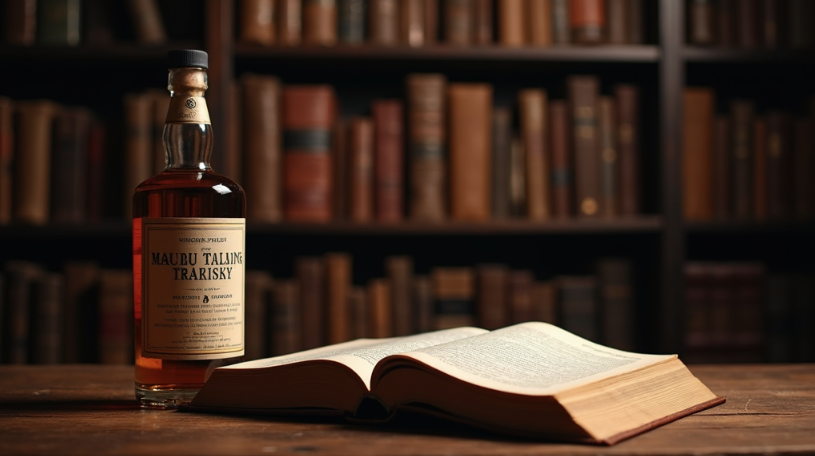
Whisky has always carried a charm that goes far beyond its taste. I have often found that a good dram not only relaxes tensions but also inspires deep reflections. In literature, whisky takes on a character of its own. It is an emblem of rebellion, introspection, and the passage of time. In this article, I check out how writers over the centuries have shaped whisky’s legacy and influenced its cultural perception.
Whisky’s Roots in the Literary World
The history of whisky is as rich as the pages of a well-worn novel. I find it fascinating how early poets and storytellers often used whisky as both a literal and metaphorical device. This spirit became a symbol of robust life and even a healing elixir in many narratives. Long before modern mixology, whisky was already establishing its presence in literary works that celebrated nature, mystery, and introspection.
Writers were drawn to its complex character. The aroma and taste of whisky evoked images of old-world charm and rugged landscapes. Many literary figures saw in whisky a mirror reflecting the harsh, yet beautiful, realities of life. Authors like Robert Burns, who penned timeless verses, infused their writings with the warmth of whisky. In his work, the drink acted as an unspoken participant in the art, silently witnessing the unfolding of dramatic emotions and quiet revolutions.
Iconic Literary Figures and Their Whisky Tales
Authors have long been enchanted by whisky. I often think about James Joyce and his eloquent descriptions of modern life in Dublin, where whisky was more than a drink. It served as a companion to creativity and a silent witness to the inner workings of his characters. In his stories, whisky appears as a catalyst that deepens the characters’ emotions and nudges them to reveal truths they often keep hidden.
Other writers like Robert Burns turned whisky into a muse, finding in it the spirit of both merriment and melancholy. His verses about whisky resonate with readers even today because they capture a sense of passion and the fleeting nature of joy. That same passion is scattered through numerous works of fiction and poetry, with whisky appearing as both a quiet indulgence and a wild companion in moments of existential crisis.
There are also lesser-known authors who used whisky as a backdrop to explore themes of nostalgia and identity. From the Romantic period to Modernism, whisky maintained a steadfast presence in the literary canon. In these works, the drink is portrayed in many hues – sometimes as a quiet indulgence. It is also depicted as a wild companion in moments of existential crisis.
Symbolism and Themes: An Ode to the Spirit
The symbolism of whisky in literature is varied and rich. I enjoy uncovering the layers of meaning that different authors imbued into this spirited drink. On one hand, whisky represents indulgence – a break from the rigid societal norms that often suffocate creativity. On the other hand, it stands as a symbol of the passage of time. Each sip becomes a way of measuring life’s fleeting moments.
Some writers use whisky as a metaphor for isolation and self-reflection. In lonely nights or moments of despair, a glass of whisky can evoke memories of lost love or missed opportunities. These narratives suggest that whisky, with its bittersweet flavor, mirrors the complexity of human emotions. It is both a comfort and a reminder of life’s inevitable sorrows.
Moreover, whisky is often portrayed as an agent of transformation. In the hands of a skillful writer, it is not merely a beverage but a transformative force that can unlock hidden truths. The drink transports a character from mundane reality to a realm where thoughts, dreams, and buried desires become tangible. Thus, whisky in literature is appreciated not only for its physical qualities but also revered for its symbolic significance.
Lyrics and Prose: Whisky’s Role in Shaping Cultural Perception
Whisky’s impact on cultural perception is undeniable, and literature has played a significant role in this process. My own passion for reading has shown me that whisky often emerges as a symbol of authenticity and resilience. Its consumption, depicted in various narratives, portrays a celebration of life with all its imperfections.
By the time I started noticing contemporary references, I realized that modern authors use whisky as an emblem of sophistication and freedom. This is especially evident in works that focus on urban life, where a glass of whisky represents a quiet act of rebellion against a norm-driven, mundane existence. Such depictions remind me of the historical allure of whisky as a spirit that defies simple categorization. It is both refined and raw.
Writers contribute to the evolving image of whisky by blending its tangible attributes with broader existential themes. Whether it is the warmth of shared moments or the cool reflection of solitary evenings, the portrayal of whisky serves as a cultural touchstone in literature. In this capacity, the drink evolves into a character itself – ever-present, consistent, and richly storied.
The Narrative of Whisky in Fiction
In checking out the narrative of whisky in literature, I have found countless examples of how its presence deepens storytelling. Whisky is often used to punctuate the narrative – a pause in conversation, a moment of solace, or even a turning point in the storyline. Its varied implications reflect a duality that many authors find irresistible.
One recurring theme in literary works is the therapeutic use of whisky. Characters often reach for a glass when the weight of their thoughts grows too heavy. In these moments, whisky appears as a quiet confidant, easing the burden of silence and introspection. It allows moments when vulnerabilities surface and internal conflicts gently unravel.
Some authors have gone further by using whisky as a narrative device to explore addiction and redemption. These stories often jump into the cyclical nature of self-destruction and recovery. Through a carefully placed description of a whisky-soaked evening or a solitary morning after, the narrative highlights the fine line between indulgence and the need for balance in life.
By seamlessly weaving whisky into their plots, writers create a nuanced portrayal of its appeal – a mix of warmth, complexity, and occasional melancholy. This not only makes the narrative richer but also mirrors real-life experiences that many readers can relate to, establishing whisky as a timeless symbol in literature.
The Art of Whisky Appreciation in Poetry and Drama
When whisky appears in poetry and drama, its role can be profoundly evocative. Over the years, I have come across poems where a simple mention of whisky triggers profound existential reflections. In many verses, whisky is a metaphor for life itself – sometimes harsh, yet always intriguing.
The fluid nature of whisky makes it an ideal subject in dramatic works as well. The subtle shifts in flavor and aroma can mirror the changing state of a character’s mind. In one dramatic scene, a character might reach for a glass of whisky as a symbol of resignation. In another scene, it might serve as a spark for renewed hope and determination.
This variety in representation is part of whisky’s enduring appeal in literature. Writers capture the fleeting quality of life through the long tradition of whisky appreciation, transforming what might seem like a simple act into a powerful literary moment. The result is a rich tapestry of words that invites readers to track down the multi-dimensional narrative of whisky.
Literary Criticism and Whisky’s Enduring Image
The study of whisky in literature has gained ground as more scholars recognize the symbolic power attached to this spirit. I have followed academic studies that point out how whisky serves as a bridge between personal identity and broader cultural heritage. Critics often note that the presence of whisky in literature is not accidental. It is a deliberate choice that underscores themes of resilience, introspection, and defiance.
Some analyses suggest that whisky’s aging process acts as a metaphor for the maturation of both characters and societies. Just as whisky improves with time, seasoned writers use it to represent the wisdom gleaned from life’s experiences. This analogy resonates universally, endowing the spirit with a timeless quality in the realm of literary criticism.
From my perspective, the academic exploration of whisky in literature opens up vibrant conversations about the interplay between art and everyday life. Every sip, every reference, reflects a larger narrative about the human experience. This enduring image of whisky continues to inspire scholars, critics, and readers alike.
Insights and Frequently Asked Questions
A few questions frequently arise when I discuss whisky in a literary context. Many wonder how a simple beverage can leave such a lasting mark on literature, or what makes it an enduring symbol across so many eras. Below, I address some of these curiously asked questions:
Question: Why is whisky such a recurring element in literature?
Answer: Whisky has a rich cultural heritage and complex flavors that perfectly mirror the intricate emotions explored in literature. Its presence in stories often symbolizes both comfort and the bittersweet facets of life.
Question: Which authors are most associated with whisky in their works?
Answer: Writers such as Robert Burns and James Joyce are well known for their references to whisky. They, along with many others, use it to underline themes of introspection, celebration, and occasional melancholy.
Question: How does whisky contribute to character development in novels and poems?
Answer: In many works, whisky is used as a tool to reveal inner conflicts, encourage moments of reflection, or symbolize a turning point in the narrative. Its rich, multi-layered character often mirrors the evolution or decline of the characters who indulge in it.
Question: Can whisky in literature be seen as a reflection of social and historical changes?
Answer: Absolutely. Whisky has traversed various social contexts, and its portrayal in literature often captures the changing attitudes toward tradition, modernity, and personal freedom. It serves as a strong cultural marker of both change and continuity.
Additional Reflections on Whisky’s Modern Appeal
In recent years, whisky has enjoyed a renewed status among both connoisseurs and casual drinkers. Contemporary writers and filmmakers are revisiting the classic themes and refreshing them with next-level cool modern twists. Across urban landscapes and intimate gatherings, whisky now symbolizes a blend of tradition and innovation. Modern mixologists have started to experiment with whisky by infusing it with unexpected flavors, thereby giving a boost to its centuries-old legacy.
This renewed interest is not merely about the drink itself. It is about the stories it tells and the emotions it evokes. New literary works portray whisky as a silent partner in the modern narrative—a token of sophistication paired with a raw, unfiltered edge. The renewed focus on whisky has led to lively debates in cafes and book clubs, where enthusiasts compare notes on its role as both muse and mirror.
Furthermore, social media has played a significant role in shaping whisky’s present-day image. Bloggers, vloggers, and poets are using digital platforms to share their personal whisky experiences. They often highlight the contrast between the old-world charm of traditional whisky making and the fresh perspectives brought in by contemporary culture. These narratives invite readers to not only appreciate the history of whisky but also to look at its future with hope and excitement.
In many ways, modern writers have taken to heart the idea that whisky is more than a mere beverage. It embodies a collection of memories, a palette of emotions, and a testament to resilience. As the cultural landscape evolves, so too does whisky’s role as both a marker of heritage and an emblem of modern creativity. This transformation illustrates how age-old traditions can be reimagined to resonate with new generations.
Concluding Thoughts on Whisky’s Literary Legacy
The relationship between whisky and literature is deep and multifaceted. I believe that every time a writer includes a reference to whisky, they tap into a legacy that spans generations. Whisky is much more than a drink. It is a symbol and a muse. At times, it even serves as a silent narrator in the unfolding story of human existence.
This exploration of whisky in literature reveals how written art shapes not only cultural perceptions of a spirit but also personal narratives. Over the centuries, the carefully crafted descriptions of whisky have imbued it with a life of its own, cementing its place in literary history. Each reference, whether in a flowing poem, a reflective essay, or a lively dialogue, adds rich layers to whisky’s character.
In my own experiences, reading about whisky in literature has always enriched my appreciation for both the drink and the art of storytelling. It is fascinating to see how every author leaves a unique imprint, turning a simple glass into a repository of human hopes, struggles, and dreams.
Every whisky-soaked narrative reminds us that art and life often intertwine in unexpected and delightful ways. Whether you are a lover of whisky, literature, or both, the legacy created by writers continues to offer insights into the human spirit. Next time you enjoy a dram, take a moment to consider the layers of meaning distilled into every word by those who came before you.
May your adventures through literature and life be as rich and storied as the whisky that continues to inspire them.
Thanks for reading, all the best
Tony

My name is Tony and I’m the creator of The Whisky Shed, a place where good drams meet good stories. From tasting notes to deep dives into distillery history, I share honest, approachable whisky knowledge for anyone who loves a great pour. Whether you’re exploring your first bottle or expanding a growing collection, my goal is to make whisky simple, enjoyable, and worth raising a glass to. Slàinte 🥃